Michael Maki – Breakfast With Aram

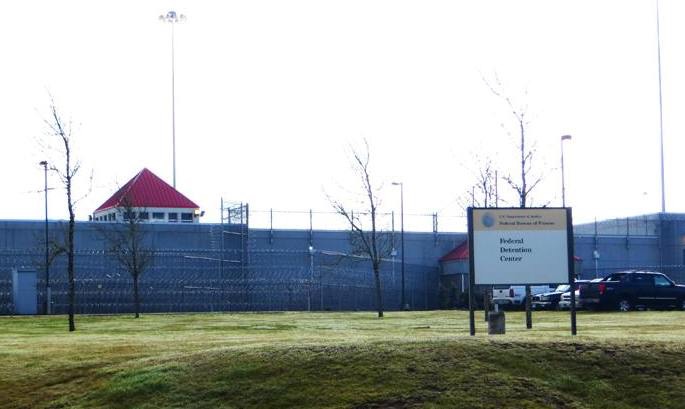
Sheridan Federal Detention Center

Sheridan Federal Detention Center

Another dispatch from our POWOD correspondent at Sheridan Federal Prison Camp, Oregon:

There’s a stir among our Armenian-Russian brethren here (there are four of them, from all different walks of life and parts of this country, befitting a people scattered to the winds by modern history). A fellow in our wing, Elvin—better known as Elvis—got papers last night that he is being relocated. So there were hurried speculative consultations as to what might be up, but no conclusions. First thing his morning Elvis found out that he’s being shipped to an appeal hearing in Oklahoma. He learned this from a hurried phone call to his attorney, who was able to get the basic and purported facts. To get there will take a few weeks, part of the usual diesel therapy punishment for being a thorn in the side of the BOP/DOJ and asking for fair recourse in the law. He’ll apparently go first to Las Vegas/Parump, the CCA federal prison nexus and privatized toll booth for a few weeks, then on to El Reno (the now-famous federal prison visited recently by President Obama), then to another location in Oklahoma, from which he’ll attend a hearing, which will likely last a few minutes. Whether he will be shipped back here is anyone’s guess, but there’s a hopeful possibility. He thinks he might be back in a couple of months.

This morning I sat down in the chow hall with Aram, another Russian-Armenian friend. Aram is a fit, burly, fiftyish man, with classic Russian enthusiasm. He’s a Russian-trained attorney who has spent a lot of time knocking about Siberia, so we don’t have many places and experiences in common. This morning, though, as the breakfast table was discussing the future (and past) possibilities of nuclear war, and life behind our respective propaganda curtains during the Cold War, Aram jumped into his Russian army experience.

All young men in Russia are required to serve two years in the military, and Aram was sent to Mongolia, where he was six months before the full outbreak of the Afghan war. Then his unit was sent to the Khandahar area, and life got dangerous instantly. The fighting in the countryside was nothing the Russians had trained for; driving out in tank convoys under sniper fire to trouble spots on mountain roads, only to have the first and last tanks in the line hit by artillery, stopping the parade. This was the common practice, almost a daily occurrence. Then, while the soldiers sat in the stifling heat waiting for air support, they didn’t dare pop their heads out of the tanks, because a sniper hidden somewhere in the rocks had a bead on every tank. Shooting Russians in barrels.

“Why? Why? For what reason?” asks Aram. “We never saw the enemy, only snipers, always. In the morning you never knew who would be killed by lunch. I lost so many good friends. For what?! To bring freedom to the Afghan people? That’s what the Russian government told us. The Afgahn people don’t want freedom, except from foreigners. They have thousands of years of their own history, their own way of life. They don’t want to be part of ours. Just leave them alone! No one will ever defeat the Afghans, not America, no one!”

Aram said that before coming to Afghanistan, he had never drunk alcohol, but to sleep at night without a strong dose was impossible, with men screaming in their sleep every night. So after a few months he began to drink the vodka issued by the commanding officer to help put them to sleep. “I sleep with my Kaleshnikov by me every night. We never know when we will be attacked, or if we will wake up in the morning.” He said that during the day the sport of the Afghan snipers was to pick off officers only, plink, plink, plink. Maybe ten men died every day, mostly one at a time.

“You go into a village, you’re very thirsty, but they poison all the water. You make them drink it first to be sure.” His broad face took on a look of remembered fear and disgust and deep sadness. “Just leave them alone. Leave them alone.” Aram survived, and after perestroika came to California to live, working with his ex-pat community. We see each other every day, even though he is in the RDAP program, and we greet each other in Russian. He loves to work with rocks, and has volunteered to help out with a kind of crazy rock planter project one of our guys has taken up on the compound. Unlike so many of the guys here, despite his experience and no-doubt PTSD, he is always cheerful and upbeat, a man of great integrity who passes through here for reasons greater than the concept of punishment meted out by our own misdirected government.
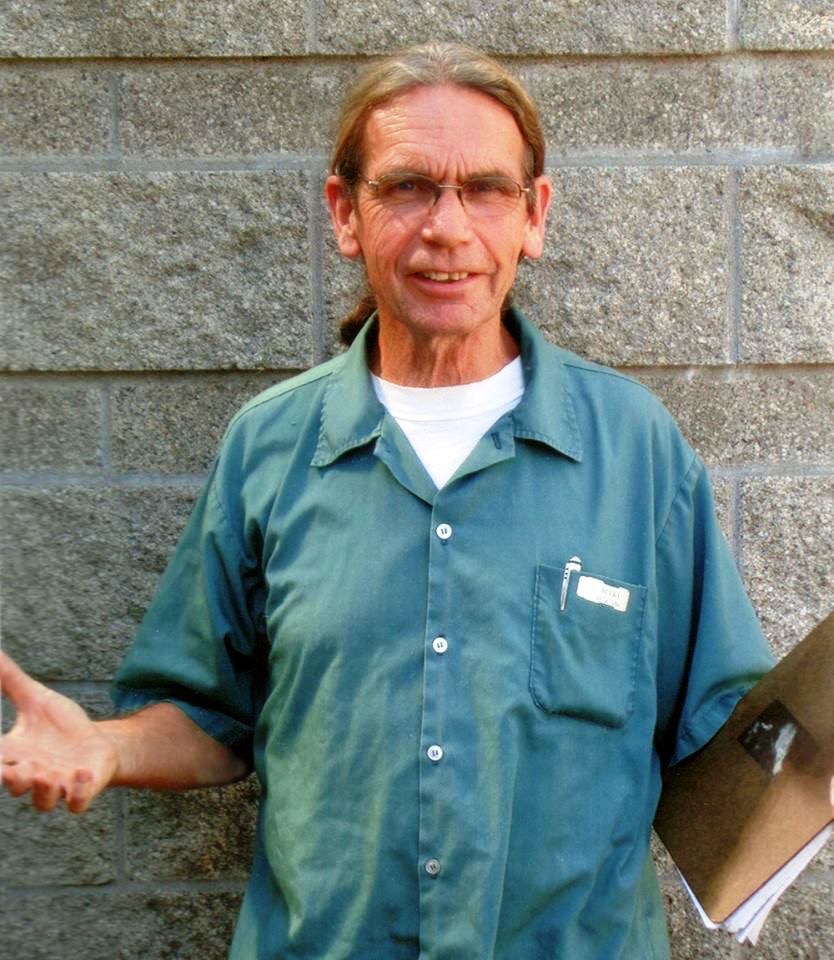
Mike Maki
Mike Maki

Michael Maki—Snapshots Without A Camera

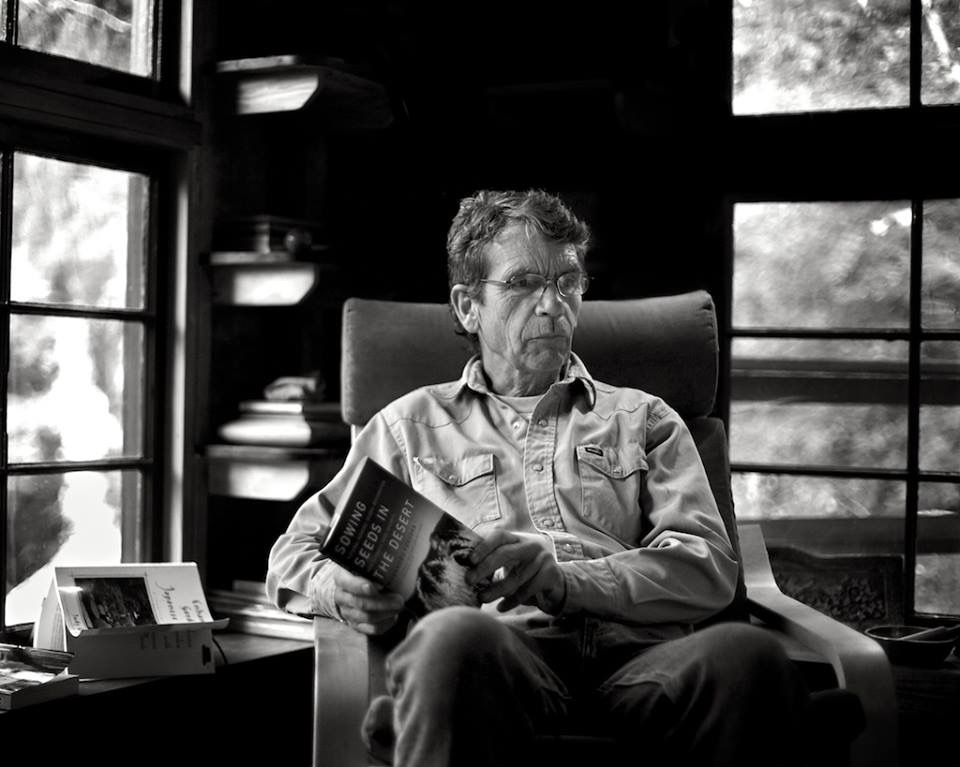
Mike Maki reading

Mike Maki, 2012, at home before imprisonment

Another dispatch from our POWOD correspondent at Sheridan Federal Prison Camp, Oregon:

Oh, how often I say, man, I wish I could get a picture of this scene! This is like some sordid live-in sitcom, and central casting has done an absolutely champion job of digging up these character actors. I had breakfast this morning with a young guy named Nutt (his real name), a fellow who it’s hard to tell if he’s got a screw loose or is some kind of idiot savant. He’s currently walking around with his arm in a cast, broken by another inmate who attacked him on the ball field, they say in order to get sent to the SHU (aka the hole) just before he was scheduled to get shipped to SeaTac FDC (Federal Detention Center) for relentless knuckleheaded misbehavior, and to avoid his own likely bruising for not paying off his gambling debts before he split the camp. More on this now-departed fellow in a moment. Young Mr. Nutt, with a wild look in his eye, is always whispering, although sometimes bursting out in a shout: “Lies! It’s all lies!” He claims to be a computer hacker, but who knows, really; no one’s had his case Googled or anything.

Joining us at the breakfast table is Mr. Kim, a Korean who seems somehow familiar. A lean, serious-looking guy, Mr. Kim is also known for off-the-wall outbursts. In conversation, I learn that indeed we’ve met before. He owned three convenience stores in Grays Harbor County, which I have shopped in many times, noting the same fellow over the years behind the counter in different stores. Turns out, he would buy one (usually from a white owner), turn it over for a nice profit to another Korean, and then do it again and again around Western Washington. He can often be seen practicing on one of the beat-up guitars from the music room, playing- and singing- off-key.

Sitting next to me right now in the computer room is a young man in my horticulture class, Curtis, who lost an arm in a snowmobile accident and then turned to pot growing, which somehow resulted in him being here. He has a good attitude, and has turned his one good arm into a powerful extension of his will. He’s an artful softball pitcher, and a helluva batter to boot, respected by all for his willingness to get right in and do his best in any circumstance.

Two days ago I got a new bunkie. Even though I had applied for a friend to transfer into the upper bunk, our passive aggressive “counselor” assigned me a new guy, just in from four years across the street in the medium. A big, really big guy, Mr. Singh, a Sikh, was no doubt a gangster of sorts in his street life, but is a decent fellow withal. We just have a big cultural gap between us. He’s getting used to our easy-going camp lifestyle, and another guy who came over with him from the medium now also hangs out in my cube, which is feeling just a mite claustrophobic. We’ll work it out, one way or another. Singh was struck by my announcing that we are a profanity-free cube: “I been down a while now, and I never heard that one before!” he observed in his kind of hybrid gangster street accent. “But I think I can work with that.”

The last two Sikhs here, Chadha and Singh (as most folks know, there are a whole lot of Singhs within the Sikh Indian religious culture) were my friends, one an international MDMA smuggler, the other a all-around wheeler-dealer, both stereotypical Sikh hustlers, always working some angle. But I used to join them during their reserved chapel time (at their invitation) to watch Sikh music videos, which consist mostly of three or four musicians, a harmonium player, tablist, and sarodist or other Indian musical ensemble playing sacred music, which in turn consists of sung excerpts from their holy book, cut with scenes from temples and crowds of worshippers. Very pleasant listening, though, and easy-going hang time that won me their friendship. Seems that Sacramento and south, and up into the Sierra foothills is American Sikh country these days, and I have an open invitation to visit and stay with Chadha’s folks anytime, but especially around December 17, which is their holy day.

Did I mention that this is a multicultural sitcom? It’s now nearly time for the Saturday night count, and I need to give this machine over to some more of the guys before bedtime. Ciao for now, MM

Michael Maki – Magic Mushrooms

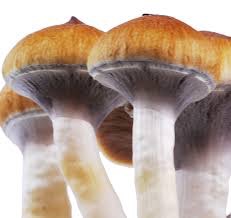
Psilocybe cubensis

Psilocybe cubensis

A dispatch from our POWOD (prisoner of war on drugs) correspondent:
——– * ——-
Here’s a little mushroom origin story from our experience. It was 1974, and we had heard rumors filtering up from Oregon that little magic mushrooms, liberty caps, could be found in fields in our coastal Washington State. We hunted and sampled—carefully—but couldn’t quite figure which of the many diminutive species they might be. My buddy Bill led the search, which became an obsession with him, and he became familiar with many fields and many kinds of mushrooms in Grays Harbor and Pacific Counties. The one semi-underground guidebook by Leonard Enos, with ink and watercolor illustrations, wasn’t much help. We knew they had to be there, but which ones were they?

Then, a friend got a letter from some local folks who had emigrated to Canada during the height of the Vietnam War and draft, and ended up on one of the remote Queen Charlotte Islands. They reported that hippies were coming there from all over the world to sample the legendary liberty caps, which grew abundantly in the fall. We anted up between us enough to help send the fellow there to obtain a live sample.

When he came back with the tiny packet in hand, Bill knew immediately which ones they were and where to find them. Exultant, we began stalking lowland pastures with certain types of indicator plants. They were everywhere! Actually, they were very shy and hard to spot, but after finding the first ones in a new field, and ingesting a few, they would suddenly appear as if by magic. Low-angle autumn afternoon light helped.

We spent many hours hunched over and on hands and knees locating and picking the indigenous delights. In the rain we donned ponchos, and after dark sometimes added headlamps. What we didn’t know was that all down the Pacific Coast of Washington and Oregon, others had made the same discovery and were pretty much doing the same thing.

We measured our daily take in plastic breadsack-fulls, and devised various drying set-ups. One of the ad hoc favorites, although limited in volume, was an empty bathtub with an electric heater inside, with window screens covering the rim. The humid, humusy smells filled the house. Candles on the table were surrounded with rainbow auras, rainy nights were magical, and sunny fall days exquisite. We had become friends and allies with these tiny little nipple-capped beings, and they were indigenous to our moist homeland.

For the first year and a half, we had the rural counties to ourselves; no one else seemed to be on to them. Curious cows would gather around us, mooing and jostling each other around the creeping humanoids. Occasionally a bull would run us out of “his” field. Curious farmers began to inquire just what we were up to, and we told them we were mycologists from the University of Washington, which seemed to work for awhile. We found that shallow drafts boats could drift from field to lowest-lying field, without having to park on the road and draw attention from the rural residents.

But a bonanza like this couldn’t stay secret forever, and the word got out, both to other young enthusiasts and then to the landowners and public in general. Soon the issue became trespassing, and magic mushrooms became an item of public interest, both pro and con. It quickly got to the high school, and of course out of hand. The beleaguered Pacific County sheriff saw a way out, announcing that “Peyote mushrooms [sic] don’t grow in Washington, so these young folks are completely mislead. We will arrest people for trespassing if landowners wish, but this magic mushroom thing is a myth.” Case closed. But so was the mushroom frontier by then.

Then we heard about a source for a little kit that enabled one to grow magic mushrooms, of a different species, indoors. Rumor had it that it was even associated with the mysterious Mr. Enos, with an Arizona address. We sent the requisite money order and soon received a fishbowl with the culture and growing instructions, which yielded a mere handfull of warm-climate mushrooms, but stimulated an interest that led to a later career in mushroom growing, which eventually led me to my current station here at the Sheridan, Oregon Federal Prison Camp. There’s a lot more to this story, but those are the beginnings.

Another thread of the story, though, is that right around the same time in the mid 1970’s, we decided we wanted to begin growing outdoor marijuana, and wanted to start right with the very best seeds possible. So, following a lead that connected us to a San Francisco rock band, Bill and I hitchhiked to California to trade a bag of our dried magic fruit for the foundation stock of our pot-growing phase, which was to last, off and on, through the next couple of decades.

Along the way, we were picked up by a fellow hippie in a tired red Econoline van, who had fled to Canada, but had immediately gotten tired of the winter and changed course to Mexico, his southern destination. Along the way, we made a deal with him to trade his van for a ticket to Hawaii, so we dropped him off at the San Francisco airport, he signed off on the van (with temporary Utah plates taped in the rear window), and we had wheels and seeds to start our enterprise. We got a couple gallons of green paint, and with rollers and brushes gave the rig a less conspicuous paint job. Many adventures followed, the stuff of local legend and a lot of laughter.

Since I got here two and a half years ago, I’ve let my hair grow long for the first time since that early 70’s era when I cut it to look less obvious as we drove around the backwoods of Southwest Washington. I have assumed the (not inaccurate) persona of the diligent hippie that I have always been, a Digger in the prison horticulture program and perennial smiling personification of good cheer and encouragement. I’ve coined a Buddhistic phrase to describe it: deep cheerfulness, and seek to practice it in the face of all discouraging things that are part of our life here in this human warehouse.
MM

Michael Maki

Mike Maki & Larry Korn

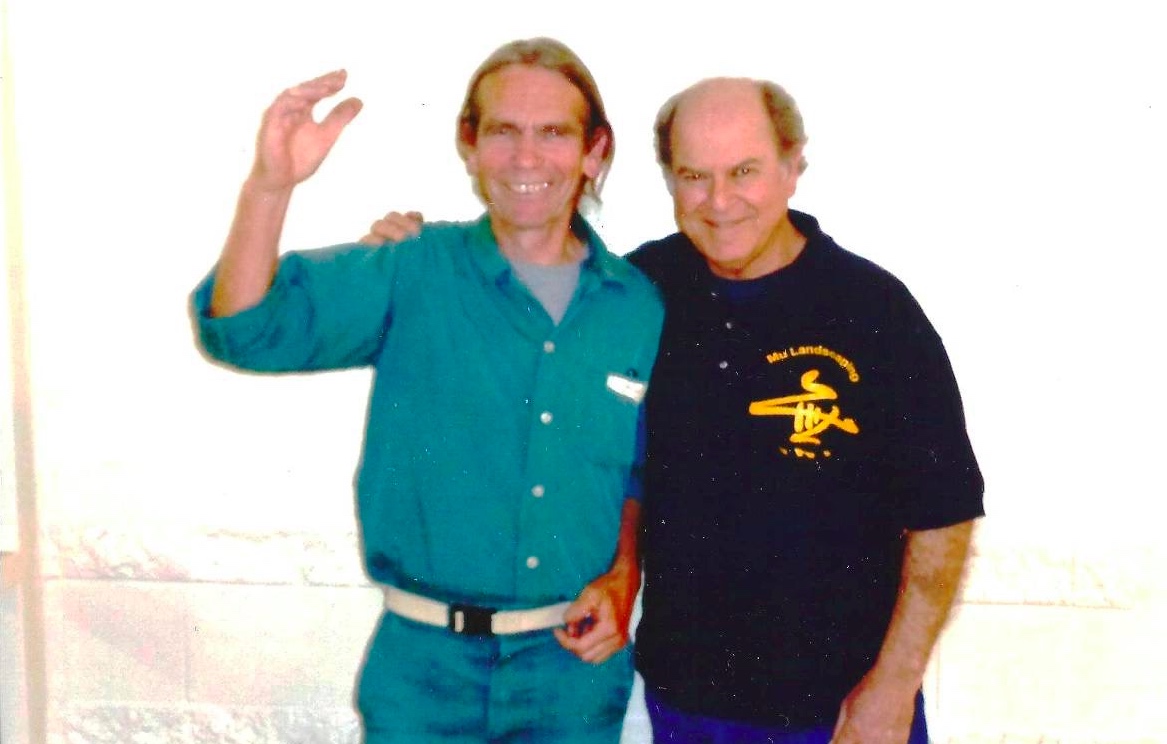
Michael Maki (left, in prison duds) with Larry Korn, appropriately slightly out of focus and up against a wall at Sheridan Federal Prison Camp in Oregon

The first three books in my Dominick Chronicles—New Jerusalem News, Some People Talk with God, and Next Exit Paradise—each had its own location—the New England coast, the Hudson Valley, and Hawaii respectively. Dominick is a wanderer, and America is his serendipitous hobby. For reasons now vague, I decided to site the fourth book in the Pacific Northwest. But it had been forty years since I wandered that part of the country. I would need help with local color details.

I now live in the locale of the first book, spent time in Catskill and Hudson researching the second, and relied heavily upon my painter friend Catherine Buchannan on Molokai for the details to jog my memory in the third. A younger me would have headed west to revisit that stretch of coast between Mendocino and Olympia that always felt like a home I never got to live in. But for all the usual boring reasons of infirmity, poverty, and inertia that was not going to happen. I reached out to my old friend Larry Korn* in Oregon for assistance.

Larry, bless him, got me in touch with one of his good friends, the horticulturalist Michael Maki, who is a native son and long-time denizen of that piece of rural coastline I had come to focus on, around South Bend, Washington. Mike and I connected, and he came through, bringing coastal Washington back to life for me, helping me create the fictional town of Port Athens, where Dominick now finds himself, again enmeshed, against his wishes, in local affairs and other people’s problems.

But all that is really beside the point here, as the important thing that happened was that I got to meet Mike Maki through his writing. I will let him introduce himself here, then in future blogs share more of his observations.

I am right now at two and a half years into a 48 month sentence for growing and distributing magic mushrooms, Psilocybe cubensis. This was my first federal arrest besides one in 1972 as a draft resister during the Vietnam War, for which I got lucky and had charges dropped, besides an additional after-the-fact pardon from Jimmie Carter. Which isn’t to say it was the first time I ever grew psychoactive fungi, but it was the first time I ever sold them to a wired-up federal informer (who I thought was a friend) trying to save his hide on another drug charge, unbeknownst to me.

I went down as collateral damage in another drug investigation. The “mushroom people” aren’t really on the screen of law enforcement, not being a dangerous drug as measured by any of the standards of addiction, violence, or bad social judgment (except perhaps the questioning of authority), but still sitting in the Catch-22 catch-all category known as DEA Schedule I, the most dangerous category, where unfortunately and inaccurately marijuana currently lies, along with heroin and other truly dangerous drugs. I have always and continue to believe in the value of psilocybin and other drugs in the class called entheogens. All of this story is told in greater depth on my FaceBook page, “Support Mike Maki.” For a lot more information and current science in this field, I recommend the published work of MAPS, the Multidisciplinary Association for Psychedelic Studies.

So here I am in a minimum security Federal Prison Camp (FPC) in Sheridan, Oregon, along with nearly 500 other men, many of whom are here because of a residential drug treatment program here that can qualify an inmate to up to one year off sentence for completion of the nine month program. I have been deemed unqualified for the program, since, well, magic mushrooms aren’t addictive or dangerous to myself or others, which loops into the Catch-22 part of this legal circus. So I’m doing my time, teaching landscape horticulture in the voc-ed program here, and generally making myself as useful as I can, following the old leftist dictum: You’re either part of the solution or part of the problem.

Feel free, John, to post and share my letters out. I’m here at an interesting historical turning point, kind of like I was during the Vietnam War, when the authorities lost heart for throwing young men into federal prison for their beliefs, and just before an illegal and unjust war ground to an end. The so-called War on Drugs is likewise winding and grinding down, and society is awakening to the facts of its injustice and inequity. And that’s the way it is here on the frontiers of social change. All the best to you and your readers, MM

* See Larry’s new book, One Straw Revolutionary: The Philosophy and Work of Masanobu Fukuoka (Chelsea Green Publishing)

In Hoc Signo Vinces

In Hoc Signo VincesThis is not an invented memory, not one of those autobiographic moments reconstructed out of other peoples’ recall and conjecture because you weren’t paying attention like that at the time. I was there and aware, capturing it all on synaptic memory tape. No one else had to describe it to me. Probably no one else even remembered, although there were hundreds of people there—an auditorium full of fellow high school graduates, their families and friends, and up on the stage the all-male, black-caped faculty. For all of them it was just another slow moment in an over-long ceremony to be suffered through, an event of no benefit nor interest to them, the most minor of awards—given first to signify its inconsequence.

I didn’t know that such a thing as a religious medal was to be given. If it was in the program, I had missed it. There was quite a lot I was missing in those days. It was as if I had devised a new mode of meditation based upon paying no attention whatsoever. Alcohol helped. That was the year I discovered the circus of saloons. By its end I had pretty much deserted school altogether, doing only what I had to do in order to escape. Attending graduation was the terminal obligation. I was there because my parents were there. I would rather have given it a miss. I knew I would be skipping all the parties afterwards, using their excuse for a nice private pub crawl. There would be a few helpful envelopes with cash from aunts and uncles.

It was an all-boys Jesuit high school, all-white as well in those days. There were 190 in the graduating class. I remember that number for some reason. I wonder if it is right. A little research tells me that was the summer when—among the many other things I didn’t notice—the Supreme Court banned prayer in public schools, Duke Snider (as a Met) hit his 400th homerun, and the first Beatles songs hit the charts. When my name was read out, I was somewhere else, maybe listening in my mind to The Drifters “Up on the Roof.” (This was before songs were stored in little boxes attached to your belt, but in your head instead.) The guy beside me bumped me, “Hey, asshole, that’s you.”

“You what?” I asked, irked.

“Your name, some award.”

At the end of the row a priest was motioning for me to get up and come to him. “Go up on stage and get your religious medal,” he said. This is where the brain film comes into focus.

There was no applause, not as there would be for the sports, honors, and scholarship awards to others that followed. A sort of embarrassed hush fell over those assembled. What sort of boy would win such an award? The Irish among them would know that mine was an Irish surname, and maybe their women would take some sort of twisted pride. “And the medal for the Most Deceived” goes to one of ours. “God bless him.” Others would just see the ultimate kiss-ass, a priesty-boy, a genuflector. It really didn’t matter. None of them knew me. None of them mattered. By the afternoon’s end they would all be history.

You can’t walk fast in a graduation gown, but I was in no hurry. This was my valedictory march. Any who cared could take a long look, because the lanky boy strolling down the inclined aisle to the stage had really already vanished. It was his ghost in a gown who mounted the steps to the stage. Whoever it was they thought they saw accept the small blue box and shake hands with the priest they would never see again. He no longer existed.

Albeit a Catholic school, there was but one religious club there, the Sodality, a small group of boys who met weekly and practiced the meditations of St. Ignatius. In three of my four years in the group I had been elected its prefect, a meaningless position no one else wanted. Meditators don’t need a leader. I had joined the Sodality because I had liked the idea of meditation. Then I had learned to like meditating as well, the practice of escape. I had a feel for it, though my destinations were rarely religious or even spiritual. It was like going to a private room and turning the lights out one by one until there was just darkness and no thought.

Perhaps because the school was such an externally religious institution, there was no need for a show of internal sanctimony. That wasn’t the Jesuit way. Seeing as we were all born and bred Catholic boys, there was no point in being extreme about it. The proper protocols were observed, but in a manly, non-sentimental mode that frowned upon any public display of spirituality. I guessed that my stint as Sodality prefect had made me a contender for the award that had few other candidates. Off hand, I couldn’t think of anyone else I would have nominated or wished it on. Being named holiest boy was hardly a prize.

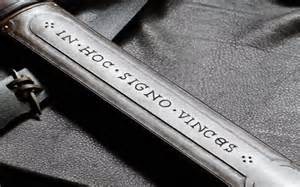
Or perhaps there was another motive. As I climbed the stairs to the stage I could see hanging on the curtain behind the seated faculty the school’s gold and blue and white banner, which included the Jesuits’ heraldic logo, a twining together of the letters IHS, signifying the order’s motto—In Hoc Signo Vinces. In this sign conquer. The priest who stood up to hand me the medal was the Father Provincial. As he shook my hand he said, “You haven’t come back to see me, John.” In Hoc Signo Vinces in deed. These guys didn’t give up.

The previous winter I had taken the battery of exams to enter the Jesuit novitiate. A snowy Saturday. I was badly hung-over. The testing took all day. There was a rigorous Latin translation section along with general intelligence and psychological multiple-choice tests. I hadn’t told anyone I was doing this. It was a secret plan of escape. Escape from what? Why, the real world, of course—adulthood and all of its choices. With this one decision I could avoid making most of the rest. Or something like that. My older brother Jim was already in a seminary. I knew I’d look good in the long black soutane and high collar. It was a viable path, a voluntary surrender. It had nothing to do with Jesus.

The only time I had met Father Provincial had been several weeks after that entrance exam. I was pulled from class and escorted to his office in the mansion beside the school. I had no idea where I was going or why. The double doors to his office were of black iron filigree and etched frosted glass. Father Provincial was a small man. He wanted to discuss my test results. I figured I’d booted the Latin part. After four years of indoctrination, the official language of the Church was still my enemy. But no, I’d passed the Latin, marginally. It was the psych part I had flunked. He read to me the analyst’s conclusions—something to do with an abnormally high honesty quotient and problems with authority figures. I missed much of it. The room had beautiful arched casement windows of leaded glass with stained-glass insets, the work of artisans from another century. I went there.

As Father Provincial read, it dawned on me that what he was saying was that I had been diagnosed as too crazy to be a priest, and this struck me as funny, a catch-22 joke on me. The anonymous, impersonal analyst had gotten it right; I was impressed. In his 3M web of true-or-false questions he had netted an imposter. I had no business pretending to be priest material. I was damaged goods, not worth the risk of investment. (Vestments—the medieval colored costumes of the sanctuary that for years as an altar boy I had assisted priests to don in ritual order—how silly they would have looked on me.)

“I was not supposed to read you that,” Father Provincial said. He was a pleasant looking little man with tired eyes. “But we can make it all right. Some psychiatric counseling, another round of tests.” He was trying to be nice, which seemed either out of character or out of place.

“No, that’s alright, father. Don’t go to the trouble. I accept the decision. Thank you.” And I got up to leave. Father Provincial objected, followed me to the door. Surely I would reconsider, think about it, come back to see him again and discuss it. The order would pay for everything. Actually, I remember those fancy French double doors from this side, looking out as I was leaving. There was sunlight in the hall beyond them. Opening and walking through them freed me.

I had kept my application and rejection secret, never told my parents; and I had no friends, either male or female, close enough to speak with about something so personal. So I had no explaining to do or backtracks to cover. I also had no regrets. Whereas before the priesthood had seemed a logical, if not natural, progression, it now seemed naively ludicrous. I never went back.

After the graduation ceremony I turned in my rented cap and gown, gave my diploma (embossed with the IHS logo) and box with the medal to my mother, and told her I’d be home in an hour or two for the small family party she’d planned. I felt like walking, I said. The closest saloon was down on the corner of Main. At the bar I ordered a shot and a beer back and pulled my last Pall Mall from its pack. Before crumbling up the red pack as trash I looked at the heraldic crest on it and its scrolled Latin caption—In Hoc Signo Vinces. I toasted my old self goodbye.

Pall Mall pack

Tennessee Valley

Marin beachBecause we lived inside the gates we knew the combination to the locks. The fog could make the metal cattle guards across the road slippery, but the big gates would always swing easily on their federal hinges. Lock it again behind you. From here in only you and the rangers get to drive. Everyone else has to walk to the ocean. Who knows what the Miwok Indians may have variously named the place. Its first English name was Elk Valley after what could be killed there in the 1850s as market hunters vied to feed the hordes of non-self-sustainable strangers flooding San Francisco ten miles south. Of course it had been all climax coastal redwood forest then, grizzly bears and cougars. All gone inside a decade after the gold-rush locusts arrived.

The low ranch house that we lived in had once been Dean Witter’s place before the National Park Service took over this land as part of the national seashore and he moved, renting it out until ten years down the line when its grandfather-clause extension would expire and it would be demolished. Except for a ranger’s frame house further in it was the only private residence still inside the park. Mr. Witter had cut himself some sort of deal when he sold out.

Sausalito was the nearest town, just a few miles drive before the gate, but the ocean end of that now treeless, chaparral-cloaked valley could have been a hundred miles away from anywhere with streetlights. It wasn’t wilderness, just mesmerizing emptiness, a landscape that had suffered the denudement of clear cutting and then thoughtless overgrazing, before the land, exhausted, had retreated into economic and ecosystemic meaninglessness, stripped down to its ancient bare-rock, steep-ridged skeleton, blanketed with fog. A landscape like the shaved head of an Auschwitz survivor, stopped only by the sheer schist cliffs and the battering combers of the North Pacific.

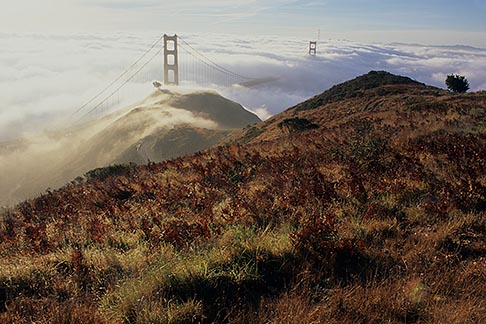
Did I mention the fog? Fog-bound was the default state of the ocean end of the valley. Sausalito might be awash with sunlight, but inside the gate grayness ruled. It was the fog that had given the valley and its ocean cove its modern name. In 1853 the S.S. Tennessee, hauling eager Forty-niners up from Panama, in dense fog mistook the cliff-edged cove for the Golden Gate farther south and plowed itself straight up onto the beach so well that everyone aboard walked safely ashore and the ship was stripped bare of goods before the sea buried it into the berm. The disaster renamed the place Tennessee Valley. I was happy there.

Marin fog and Golden GateNow there’s a statement for you, a judgment lacking all objective indices, a panel of ghost judges holding up score cards—8.6, 8.8, 8.5, 9.0—and one memory contestant moment gets to smile and step—oh so temporarily—onto the highest little box: a happy time. Compared to what? Measured by what? Can it be replicated? What does the fog have to do with it? I think it was Clive James who identified happiness as “a by-product of absorption,” and the root of happiness is perchance. I just happened to be happily absorbed into that landscape, that place, those misty headlands that I had by chance been brought to. There never has been a plan, and in those years the very idea of a plan, of an external compass, of a predetermined destination seemed a sort of heresy. No. There were maps of a sort, of the shifting sort you see in ganglia black against the pink of your eyelids when you close your eyes in sunlight, maps that resembled a cluster of neurons in the neocortex, make that the future cortex. But those maps had nothing to do with geography. They were charts without names, portolas so secret not even their owner knew their meaning. Tennessee Valley just arrived.

I never actually lived there in that low moldy ranch house that the sun seldom shined on. I mean I never paid rent or met the landlord. I had an address elsewhere, but at the time it seemed like I only visited my place in Berkeley and the valley was my home. C lived there with her young daughter. They shared the big house with two other single mothers, each of whom had a daughter of about the same age, and, of course, the mothers’ lovers, as transient as I. This was the heart of my non-attachment years, still practicing my vows. It suited C as well, who had her own secret internal maps.

That household consumed an amazing amount of toilet paper. One night, stoned, the other two guys and I got together and pooled our tp purchases and figured out how few months it would take for the tp used there to stretch to L.A. That conversation began with a discussion of whose turn it was to pay for a septic tank pump out. I was happy there, a house that belonged to the women folk in which us men were allowed solely as a convenience. But it wasn’t the house. It was the valley it sat in, the hills that loomed over it, the birds that lived and visited there.

In my beat-up, old, taped-together, many-times soaked and many-times-dried, but still solidly in tact Peterson’s Field Guide to Western Birds there is still a yellow folded paper list of my bird species count from one Easter Sunday there—42 species in all, including sea and shore birds, and I had given up early to sit and watch the comings and goings of golden eagles from a condo-sized nest on a cliff above the ocean. It was a place of raptors—kestrel, red-tailed, rough-legged, goshawk, harrier, horned owls, burrowing owls, saw-whet, eagles, and vultures. They ruled the up-drafts and the sky.

Marin cliff and sea

In Tennessee Valley and nearby Richardson’s Bay I found, by unplanned and unanticipated happenstance, total absorption in birds, especially those who seemed to acknowledge no boundaries to their flight. On mushrooms once I visited the throngs of migratory sea birds resting in the low-tide mud flats of Richardson’s Bay and quizzed them about what it felt like to do what they existed to do. As long as I stayed motionless they tolerated me, but none could answer such a stupid question from a creature who existed in only three earthbound dimensions. I never asked them if they were happy or not. They were all invincibly alert and alive. Birds have ever since retained the gift of making me happy. They are me idealized, me with wings—flight, height, distance, movement, the freedom to fly above the fog.

On Correspondence

Quill Pen StampFrom back when I did athletic things I remember enjoying the practices as much as the games—hitting a tennis ball against a wall over and over and over again, observing the strict rituals of baseball workouts, running basketball plays against token red-shirt defenders. Practices were play with teammates (or a wall or an empty basketball court). Games were challenges from unknown opponents, enjoyable in another way, but mainly if you won.

Of course, you could not play at all if you did not practice. Missing practice was the worst offense. Somewhere back then I was taught that there should be at least ten hours of practice for every hour of game time. The all-stars were the guys who were most obsessed with practicing. I was not one of them. I just enjoyed the time I got to spend on the field or on the court.

That is called a sports analogy, because what I mean to write about is correspondence. A perennial publishing phenomenon is the issuance of new volumes of dead authors’ letters. One of the rungs of literary fame is having one’s letters collected, selected, edited, and published. Critics then use them to either polish or abrade an author’s public persona. The letters are not part of the oeuvre, but they do become essential to the encompassing penumbra necessary for nurturing enduring fame, for ill or nil.
I think of Bloomsbury and the missives that Virginia and her gang sent back and forth by the morning and afternoon London post. These were not just pre-digital Tweets or the equivalent of text messages. They were mini-performances of style for peers, written in ink with a pen in hand, with pauses to find the right phrasing. They were part of a day’s work with the English language as a clear and clever means of connection. Those writers enjoyed the time they got to spend on their messages, just as I enjoyed the time I got to spend on the playing fields of Buffalo. In their own way they were practice.

Throughout my career as a writer—and I have thought of myself as a writer for more than half a century now—I have considered all writing as correspondence. Poems, essays, short stories, novels—they have all been written to someone. They each had a message I meant to convey. The actual letters, the missives to individuals—and they are approaching 10,000 now—were the warms-ups, the stretches and sprints, the lay-ups and batting-cage swings for what followed—the real game of literature. Many poems found themselves born in lines from a letter.

I have been blessed with some fine correspondents, friends for whom language likewise held powers of discovering meaning, for whom finding the right words and sharing them was an important, an essential way forward. Many of them are dead now, and my world of correspondents shrinks. This is problematic, as I need those teammates to practice with before the games I play with other forms. They are part of the mix, part of the measure, a constant reminder that what I am doing is speaking directly into a personal listener’s ear.

In return, they would favor me with their insights. We practiced together, hitting the ball back and forth over the postal net of distance and delay. But that letter writing craft now seems to be dying out as well, for ill or nil; and I worry for that, for what is lost. There is a reason this discipline carries the label Arts & Letters. To whom shall I send this? Who will respond?

Fungod, Berkeley, ‘77-78

TransamericaI was living in a garage in Berkeley at the time, after I came back from Hong Kong. I was what? Thirty-one, thirty-two. There was no heat in the garage, but there was an old electric space heater in the attached potting shed where I had my sleeping bag up off the dirt floor on a door on cement blocks. It never freezes in Berkeley. The garage doors had been replaced with mismatched many-paned French doors. If it wasn’t raining and the sun was out, the place was cozy for a couple of hours every day in the late afternoon. A big redwood tree grew next to it, sheltering the place from everything, including the sun. I had running water from an outside spigot, but no bathroom. My landlady, a working single mother who lived in the front house, let me use her downstairs bathroom, which was just inside the unlocked back door. We rarely met or talked. I don’t remember her at all.

I had a small refrigerator and a hot plate, a pot, a fry pan, a bowl, a plate, a mug, two glasses, flatware, and a hunting knife. There was a desk—another old door, this one up on milk crates—with my baby-blue portable Smith-Corona electric typewriter on top of it. The sole piece of furniture was a short rattan seat with three-inch legs at the desk. There were some pillows on the cement floor for guests, but I don’t remember any. I was content there. I tried to write fiction and failed succinctly. These were my psilocybin years, the years in which I learned to accept the fact that failure and I were like an old married Catholic couple who could never get a divorce.

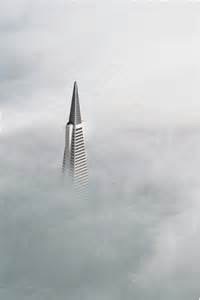
I had a job—I’ve always worked—as an after-hours legal file clerk for Trans-America Insurance in the Pyramid across the Bay in San Francisco’s financial district. I had no car. I took the F bus over and back. Three to eleven, pulling and copying documents for a mammoth law suit. The most mindless job I’ve ever had, even more numbing than sweeping steel plant floors or picking artichokes. I did it all as a paid observer, fueled by magic mushrooms.

The mushrooms came prepared as a powder, the consistency of ashes from an ash tray, inside black film canisters. They came from an enclave of illegal Japanese dope-dealing growers up in Alpine County. Their gage was good, too, but their psilocybin could not be beat. Each canister contained the equivalent of two-to-three tabs of LSD, but as a powder you could control your intake. Before work every day I would spread a dose or two on my palm and lick it off, wash it down with a can of Rainer Ale. During my shift it was simple to augment the dose as imposing reality required—no smoke, no works, no nothing required, just a grey line on my palm to lick off and relaunch. I never shared it, and no one ever got to watch me lick my palm. It was a private high world.

An important injunction came with the mushroom dust, part of the ritual—not a religion, just an understanding—it was not to be sold for a profit. My connection passed it on to me at his cost, five bucks a canister. I never sold any. Who would buy it anyway?  It was so cheap it must be shit. Smart druggies paid top dollar. Besides, it was a mellow high not a rush—long and thorough, totally unthreatening. It was just a fungus after all.

The high was an entrance, a through-the-looking-glass sort of thing. It filtered out most of reality’s short waves, the frenetic ones, the immediate ones, the invented ones. This included most human inter-activity. All that stuff with others still went on, but as if on a flickering screen off in a corner that I could monitor and tune in and out. The world was much larger with all the social foreground filtered out, revealing a much deeper and more diverse sphere of sensation. When you learn to use all your senses as one, you-as-observer disappears, and conflict becomes impossible. I’m sure people thought I seemed disengaged, because I wasn’t engaged with them but with what encompassed them.

Of course, I was celibate and had no social life. When I got out of work at eleven p.m., I would hit a few North Beach bars before catching the F bus back across the Bay, but all that was always a solo event. I did a great deal of walking. That was my main entertainment. The mushrooms—the Fungod, I called them—preferred the outdoors and made me keep moving. I would walk for hours, for days when I could. On my days off I would dose myself up and head for the wilderness hills, either up behind Berkeley or over in Marin, and bird watch. I have never been in better shape.

It has been thirty-five years since my last visit with Fungod. At some point, social reality came kicking and bitching back into my life, and I let it. It is the human part of human nature that degrades us, that inhibits us from becoming what we might be. At least once, for a few brief years, I managed to escape and become part of not just us but of a vast non-personal macrocosm of infinite, intertwined detail. I had a glimpse of the homeostatic wholeness.

By the way, we are nothing.