The Nature Of Dissonance Dissolved

I started this blog to record this trip. My friend Ken Shane suggested it. He would set it up and manage it for me. A new medium, on a slightly different wave length. I had never read a blog (still haven’t), so I have probably done it badly. I took it as a sort of challenge—to take the day-to-day and make it entertaining. All us writers are only entertainers after all, sideshow hawkers peddling distraction.

An obvious point of this journey was to escape the miseries of New England winter. In this it was eminently successful. It was snowing the day we left Rhode Island, but we had no idea how record-breaking miserable the weather would become in the ensuing weeks. I have avoided drawing attention to the contrast. Schadenfreude is not among my guilty pleasures. And it was chilly in Key West. I had to wear long pants.

In Linda's Jacuzzi

In Linda’s Jacuzzi. (Photo: C. Payne)

This blogging is sufficiently self-aggrandizing without rubbing it in. What else is this exercise but the blogger’s self-assertion of his personal significance? I am important. My opinions and observations are worthy of someone else’s attention. But then, isn’t that the message of all this new “social media”? The hubris wave lengths have become hugely profitable for their purveyors. No need to create a market for ego, just pander to it. Every child who ever pled look at me is a potential addict in this lottery for acknowledgement. The result? A universe of mundane revelations seen through a thicket of selfie-sticks.

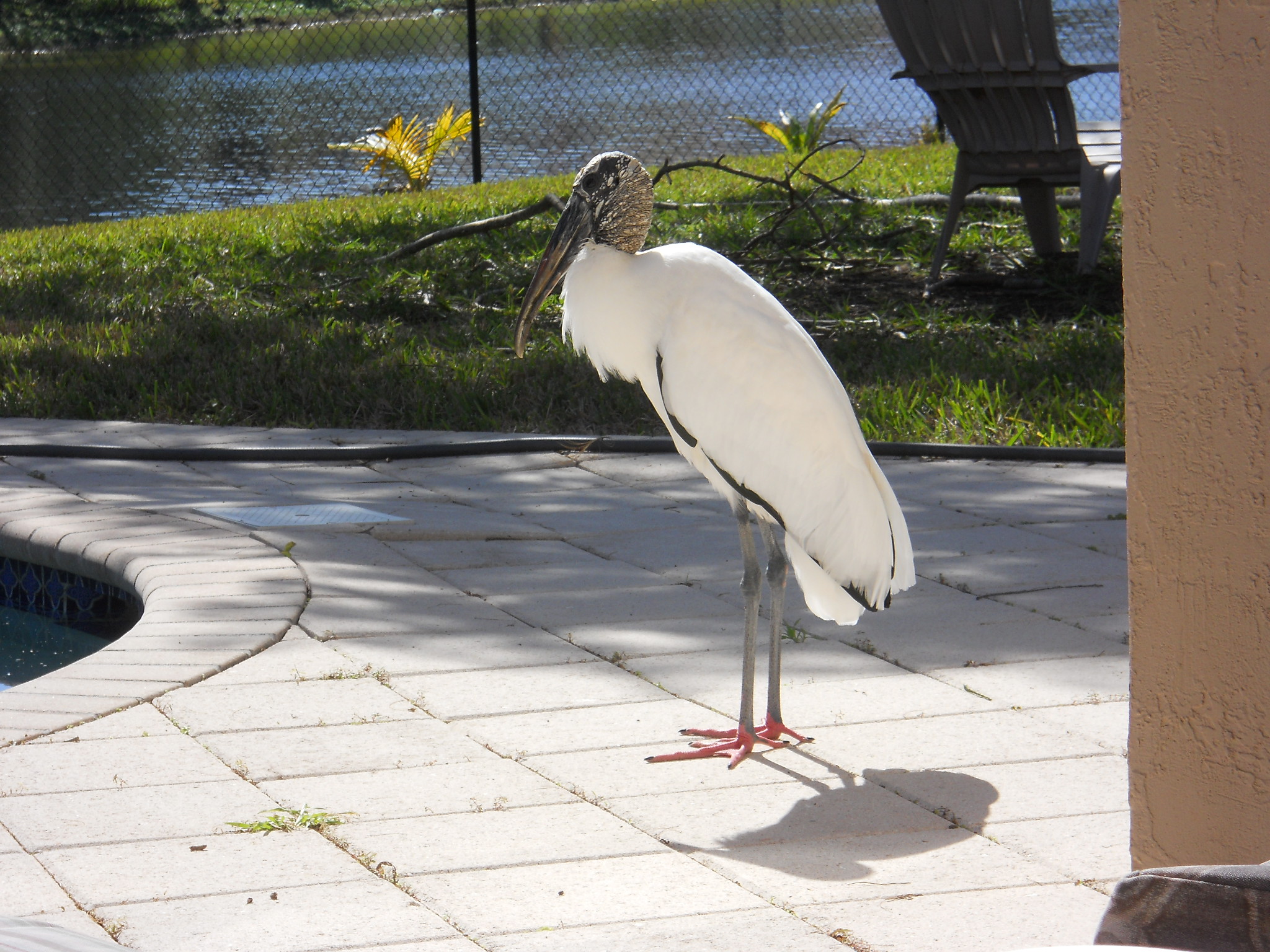
At the outset I promised to be honest. It has been great living in gym shorts, T-shirts, and flip flops. Some days the sun has been too hot to absorb for long. The food has been great, and the constantly changing company of tropical birds a pleasure. Back home our empty house is snowed- and frozen-in, my pickup truck buried until spring. I’ve been glad we haven’t been there.

Tomorrow we head back north in gradual increments, retracing traversed country, back to the past where the future lurks. Who knows if we will return this way again?
Key West

Key West Balcony

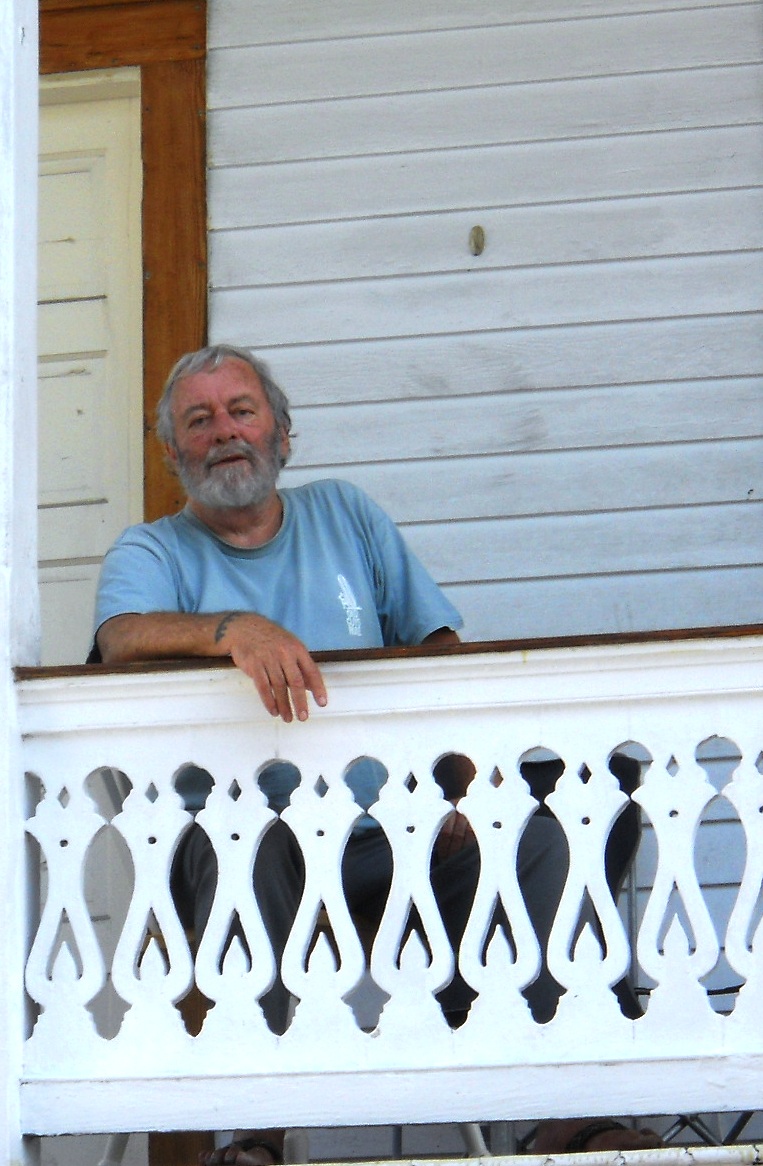
On the veranda of the old hospital, Key West. (Photo: C. Payne)

It is the contemporary curse of small-island resorts everywhere—incoming visitors. Here in Key West the frequency of plane arrivals picks up in the afternoon and builds through sunset and twilight. The final approach to the airport is right over Old Town. The bigger the plane, the louder the noise, the longer speech is pointless.

Connie and I are staying in Old Town, with our friends Bud Navero and Cindy Allison, just a block off essential Duval Street. The humble building where they live is on the National Register of Historic Places, the Louise Maloney Hospital, built in 1876, the first private hospital in Key West. On the second floor there is the original operating room, with lots of tall windows and a cement floor with a central drain. Sitting on the upstairs front veranda, we wave to the tourists going by on their cute little tour trains, and they wave back. Just a half dozen blocks away the cruise ships off-load their crowds of day-visitors.

The first Europeans here, Spaniards, called the island Cayo Hueso, “bone cay,” because they found so many human bones strewn around, an indigenes’ burial ground. Earlier dead tourists. Cayo Hueso easily became Key West when English speakers took over. Also it was the farthest west inhabitable cay. Yellow fever extended the funereal tradition among the white adventurers who replaced the original inhabitants.

From Some People Talk with God (Dominick Chronicles #2):

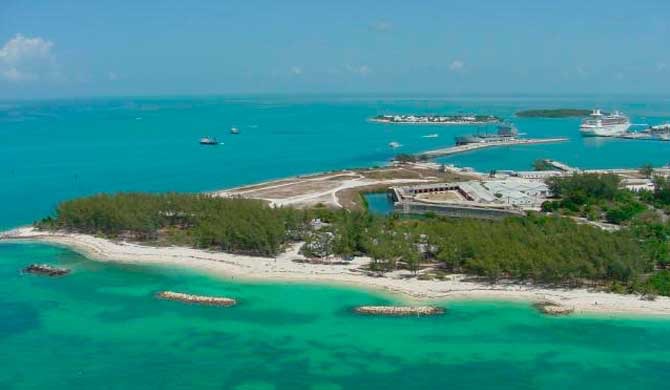
Dominick never got to go sailing, but after the first few weeks he did wander a bit, down to Key West to visit Fort Zachary Taylor right at the southern tip of the town and of the continental U.S. The South doesn’t get any deeper than this, Dominick thought, but Fort Taylor—and Key West—had remained in Union hands throughout the war. The fort had once been out in the ocean, surrounded by water, but now was surrounded by land and a partial moat. Its guns would now fire out over a state park and crowded beach, their only possible targets passing cruise ships. This fort, like Fort Ward, had never seen any hostile action. Its ten-inch guns had never been fired in anger. The deaths here had all been from yellow fever.

Fort Zachary Taylor

Fort Zachary Taylor

Like its sister site of Floridian history, St. Augustine, 500 miles to the north, Key West is an intimate place, inauspicious in modern demographics, with fewer than twenty-five thousand souls—not counting those just passing through. As an aesthetic city of refuge it has been home to many artists and musicians and such writers as Ernest Hemingway, Tennessee Williams, John Dewey, Shel Silverstein, Stuart Woods, and our host Bud Navero, author of the unfailingly entertaining Key West Confidential.

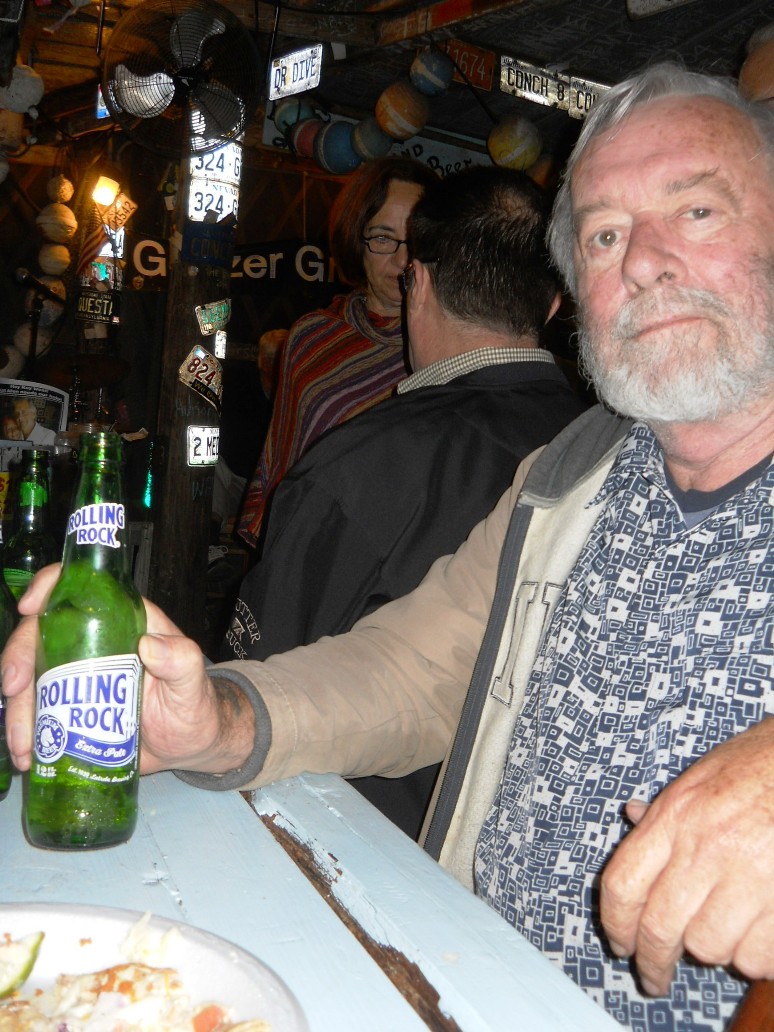
Thanks to Bud and Cindy, we have had an insider’s tour of Old Town, a highlight of which was singing along with Barry Cuda and Chief Billy of Bong Hits for Geezers at B.O.’s Fish Wagon on Caroline Street. It was a chilly Saturday night, down in the 40s, and there are no walls at B.O.’s Fish Wagon. It was a rare night for the locals to sport the layered look. How many T-shirts can you wear at one time?

As gentrification and the commerce of transients metastasize, Old Town Key West, as land of the free and home of Bong Hits for Geezers, will slowly slip into history. Charm mutates, and the past glows sunset golden for us geezers. But the place still jumps with energy. The streets are alive with people happy to be here. And the young are as beautiful as we ever were, nostalgia be damned.

At B.O.’s Fish Wagon (Photo: C. Payne)

At B.O.’s Fish Wagon (Photo: C. Payne)