The Storage Story

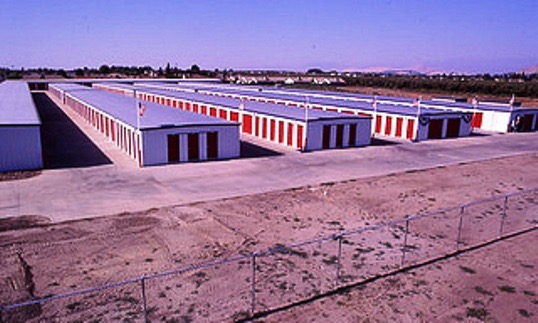
StorageAny meditation on the current state of our nation should include consideration of the recent ubiquity of self-storage facilities. On our recent Eastern Seaboard sojourn I was surprised by the frequency and size of them along the highway. What’s going on? Are we as a nation storing up goods essential to our survival in an imminent Armageddon? Are these ominously boring sites the nuclear age equivalent of our ancestors’ grain silos? Will they save our tribe from starvation and annihilation? Are these the safe-deposit vaults in which the aesthetic prizes of our dominant civilization will be preserved for a kinder prosperity? Or are they evidence of yet another weird twist in the evolution of a society obsessed with the obesity of ownership?

There are now more than 50,000 such warehouses for personal goods across the country, offering Americans close to two-and-a-half billion square feet of rental space in which to stash the shit they can’t fit into their already stuffed houses and garages and backyard storage sheds. In spite of the fact that the size of the average American home has doubled in my lifetime, one in ten households now feel the need to store their excess elsewhere.

Or is it that simple? The earliest such storage spaces, in the late nineteenth century, were for the metropolitan rich—basically well-guarded buildings where the Gilded Agers could safely place their valuables while they were travelling or away at their vacation homes, a cool place for their out-of-season furs or that extra grand piano. Art collections gathered there, heirlooms, and out-of-fashion antiques. Think the end of Citizen Kane. An ancillary attic of the rich and famous, an expensive perk.

Today’s roadside facilities have no such white-glove pretentions, and the class they attract is not the mansion set. Who are they then? Many are victims of what sociologists call “life events”—divorces, foreclosures, sickness, deaths in the family, job dislocations, bankruptcy. For some a rental storage unit is just a temporary measure as they get their life, hopefully, back on track. For others it is the end of the line, for whom even the monthly storage rental fees become more than they can pay, and they walk away, leaving what they have saved of their lives up for forfeiture and auction. In one way these facilities are the ultimate pawn shops, testimony to the new transient uncertainty of life for the working class.

But for many other people a storage unit is just a place to stash the crap they can’t bring themselves to trash. Other species hoard, but usually just things to eat. We started out as hunters and gatherers. Few of us now hunt to eat, and our instinct for gathering has little to do with sustenance. We gather now to identify ourselves by what we possess. Property is status. We even invented a “right to property” to sanctify our accumulative lust. Stuff is us. Don’t give it up.

The potlatch customs of indigenous Columbia River nations enraged early American immigrants. Here a prominent family would assert its status by divesting itself of what riches nature—and the salmon-rich river—had bestowed upon them in a grand show of largesse and self-diminishment. A truly Satanic impulse! But even those first Anglo invaders brought with them only what they needed. True excess consumption was yet an American dream.

On one website I read an exchange among militia survivalist types about what to hide in your storage unit—stockpiles of provisions and ammunition up front (keep the weapons ready at home)—in preparation for the ultimate property fight. But padlocked behind most of those folding steel doors is the past, not the future, what Americans don’t need but don’t want to give up. When it comes to stuff, you can’t take it with you, but you can leave it for someone else to deal with.

What Would Buddha Do?
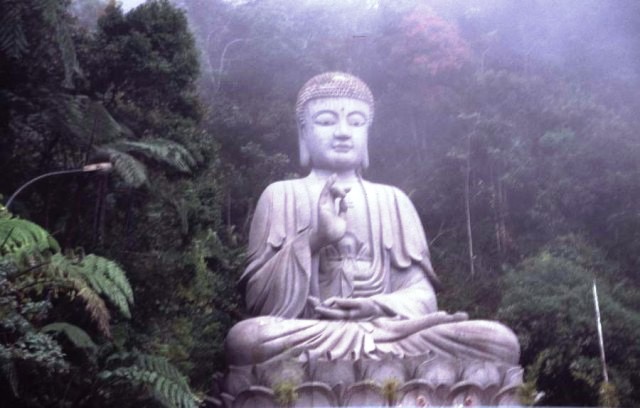
Buddha

Solitaire Definement

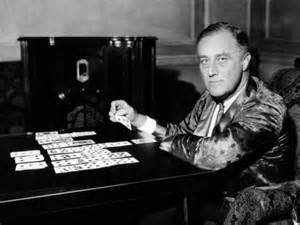
FDR playing solitaire A couple of weeks ago I saw a cartoon of a child watching her father play solitaire with a deck of cards. She says, “I didn’t know you could play solitaire without a computer.” I sometimes play solitaire on my laptop, a solitary vice but hardly an addiction. It could be a meditative exercise or a waste of time, or both. Sometimes when I am mindlessly clicking through the digital deck, I will be treated to vivid memory replays of scenes from my past, or a story plot problem will solve itself. I once wrote a short story about a game of solitaire that kept repeating, the exact same cards, time after time. Being human, I discover (mistaken) patterns in the order of cards and devise (pointless) strategies against randomness. If I play with troubles on my mind, I lose.

During one particularly egregious series of losses I came to wonder how many ways I could lose. On line I discovered the following:

How many possible games of solitaire?

A well shuffled deck of cards has a lot of possibilities. How many exactly? You can think of it this way. The first card you put down can be any one of 52 possible cards. The next card can be any one of the 51 remaining cards. The next can be any one of the remaining 50, and so on. This is expressed mathematically as 52! (52 factorial) possibilities for different arrangements of the cards in a shuffled deck. That means:

52! = 52 * 51 * 50 * … * 3 * 2 * 1 = 8.07 * 10^67
That’s 8 with 67 zeros after it. Which is a lot of possible arrangements for the cards. Think about it this way. Let’s say you took 7 billion human beings (roughly the number of humans on the planet today) and you had them play 100 games of solitaire each, every single day, for the next 10,000 years. In other words, the entire human race will be doing nothing but playing solitaire for 10,000 years. How many games is that? It’s:

7,000,000,000 * 100 * 365 * 10,000 = 2,555, 000,000,000,000,000 = 2.555 * 10^18
In other words, all of that solitaire playing does not even begin to put a dent in all the possible games of solitaire.

So, assuming well-shuffled decks of cards, it is quite possible that every game of solitaire ever played has been unique. If you shuffle a deck of cards, lay it out and play a game of solitaire right now, chances are that you are the only person who has ever played that particular configuration of cards, and it will never be played again.

That made me feel special. Participating in a 1 in 10 to the 67th event is as close as I’ll ever get to the infinite.

What are the odds of winning a game of solitaire?

The only way to answer that question is to play lots of games of solitaire and see what the average is. Fortunately someone has taken the time to do that. He claims that if you are playing normal “Draw 3 cards, keep going around deck” (Klondike) solitaire your odds of winning are roughly 1 out of 6 games. I don’t believe him, but then my laptop doesn’t let me cheat. Is there an app for that?

Roundtrip Journeyman

Cities I Have Walked This Way

(looking for sense in the time map)

Buffalo, Boston, Manhattan, Dublin, London,Frankfurt, San Francisco, Copenhagen, Berkeley, Charleston, Portland, Honolulu, Venice, Bozeman, Paris, Stockholm, New Orleans, Hong Kong, Chicago, Apia, Suva, Seattle, Sydney and Townsville and Auckland, at least

Take it to the wall again tonight, bro.

Finish the bottle and the cigarettes.

You’re not there yet. Take it to the streets

long after midnight. At the market

women are sleeping beside their taro.

Taxis are taking the last whores home.

Take it to the waterfront where always

everywhere men are awake with their

cigarettes. Walk it past the police station,

let the back street dogs bark at you.

Take it back to your indigenous city jungle,

walking like a ghost that casts a shadow.

Take it back, reclaim your birthright—

lost nights on the street like a swollen

scabbed-over fist, a bad cup of coffee,

a women in your brain driving you crazy and

a long walk home where you don’t want to be

because the words won’t begin and

the bottles are empty and the bed

is a succubus. Walk it off, shake it off,

city boy. Disappear in an alley way,

walk through that wall to survive.

(from 14 Degrees South, John Enright © 2012)

*   *   *   *

“I think you travel to search and you come back home to find yourself there.”
― Chimamanda Ngozi Adichie

*   *   *   *

3700 miles later, Connie and I drive back across the Jamestown Bridge from Kingstown onto our home island, making this a roundtrip. We have been dodging weather all the way up, waiting for windows of warmth to the north. Not all journeys are roundtrips. There have been many places of no return, just passing through.

There have been hitchhiker wandering times in my life when I would wonder if the strange town I was hiking into with just a pack on my back would become a terminus destination. I might meet some woman in a bar, find some seasonal work; and the next thing I’d know it would be three seasons later, she’d be pregnant, and I’d just bought her a used washing machine. That almost happened a couple of times. Life would have been different. Fate is just another name for happenstance. Chaos shrugs off determination. One of them was named Petranella, warmth in a Montana winter.

In and out of time, like traveling from state to state. There is nothing as timeless as an empty highway, where your mind is free. The future is ahead, speeding toward you, but you can’t see it. Or think of it this way—that you and the present are stationary, unmoving, and the world and time are speeding past you.

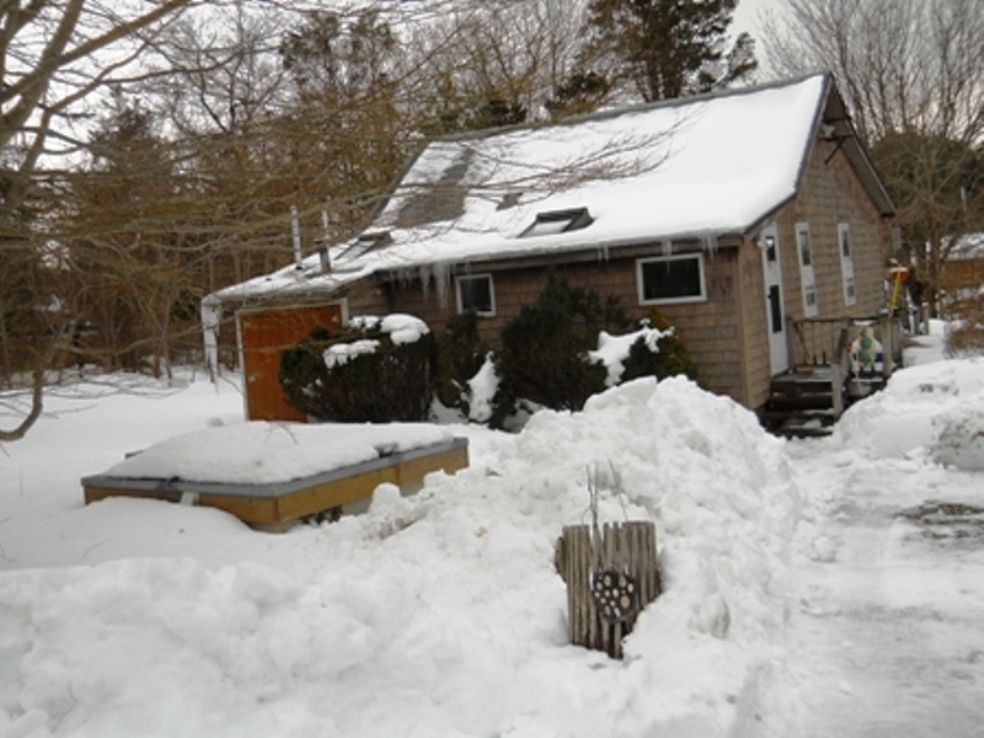
home Back to our cabin buried in snow where the road ends at the woods, a single deer track through the drifts. The Weather Channel has made it from Juno to Thor in the naming of storms in our absence. I turn my cell phone back on. The six weeks of collected mail is mostly bills. The first night back my dreams are all of Samoa and filled with the dead. Is déjà vu caused by past dreams of the future? In Florida the most common birds were the always effortlessly circling vultures.

Roundtrip. Desert nomads followed a cycle, always moving, always returning. No true navigator ever set sail thinking that he could never return. We come home and find ourselves, like an imprint in a favorite chair.

The Nature Of Dissonance Dissolved

I started this blog to record this trip. My friend Ken Shane suggested it. He would set it up and manage it for me. A new medium, on a slightly different wave length. I had never read a blog (still haven’t), so I have probably done it badly. I took it as a sort of challenge—to take the day-to-day and make it entertaining. All us writers are only entertainers after all, sideshow hawkers peddling distraction.

An obvious point of this journey was to escape the miseries of New England winter. In this it was eminently successful. It was snowing the day we left Rhode Island, but we had no idea how record-breaking miserable the weather would become in the ensuing weeks. I have avoided drawing attention to the contrast. Schadenfreude is not among my guilty pleasures. And it was chilly in Key West. I had to wear long pants.

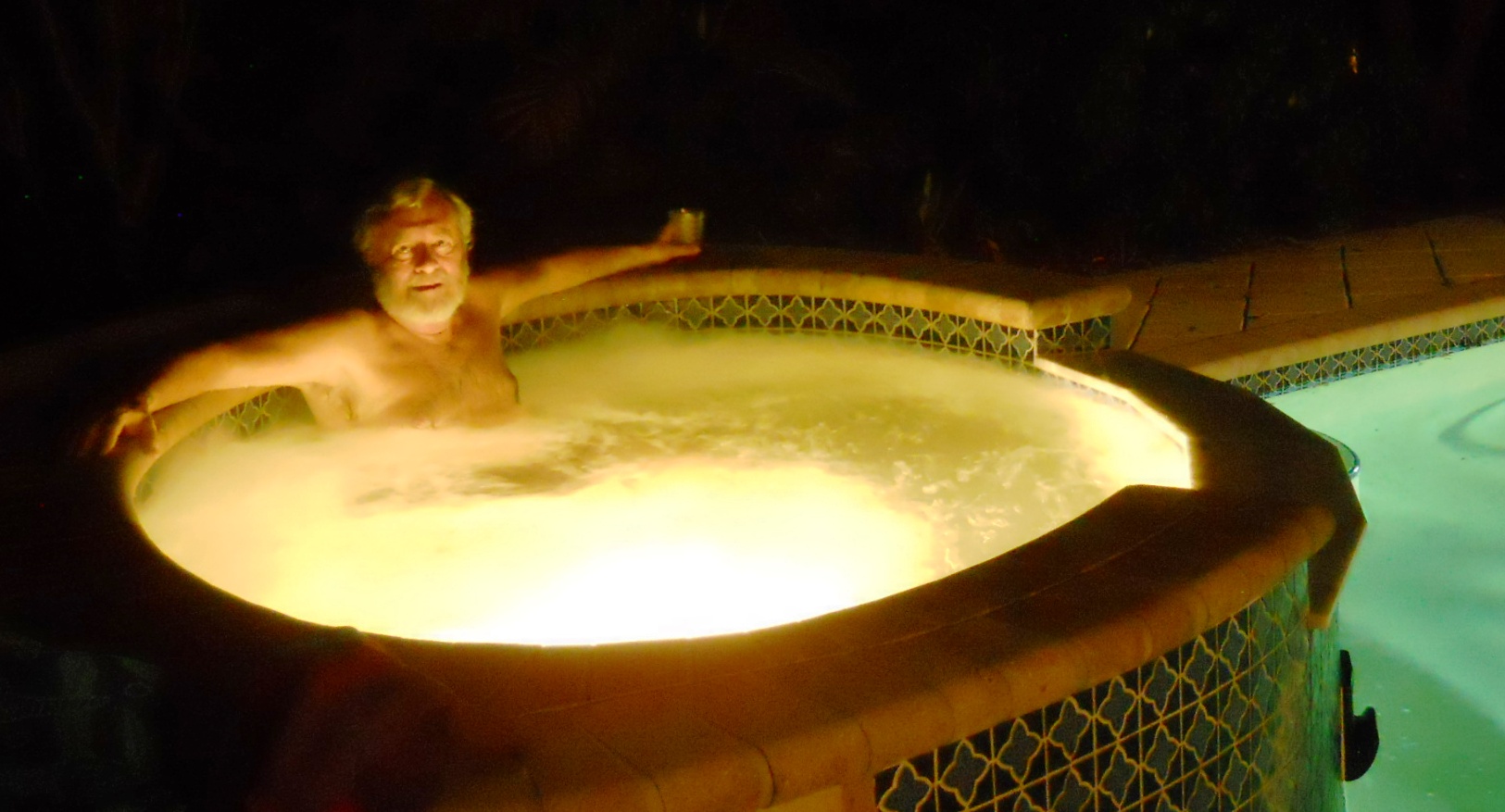
In Linda's Jacuzzi

In Linda’s Jacuzzi. (Photo: C. Payne)

This blogging is sufficiently self-aggrandizing without rubbing it in. What else is this exercise but the blogger’s self-assertion of his personal significance? I am important. My opinions and observations are worthy of someone else’s attention. But then, isn’t that the message of all this new “social media”? The hubris wave lengths have become hugely profitable for their purveyors. No need to create a market for ego, just pander to it. Every child who ever pled look at me is a potential addict in this lottery for acknowledgement. The result? A universe of mundane revelations seen through a thicket of selfie-sticks.

At the outset I promised to be honest. It has been great living in gym shorts, T-shirts, and flip flops. Some days the sun has been too hot to absorb for long. The food has been great, and the constantly changing company of tropical birds a pleasure. Back home our empty house is snowed- and frozen-in, my pickup truck buried until spring. I’ve been glad we haven’t been there.

Tomorrow we head back north in gradual increments, retracing traversed country, back to the past where the future lurks. Who knows if we will return this way again?

Key West

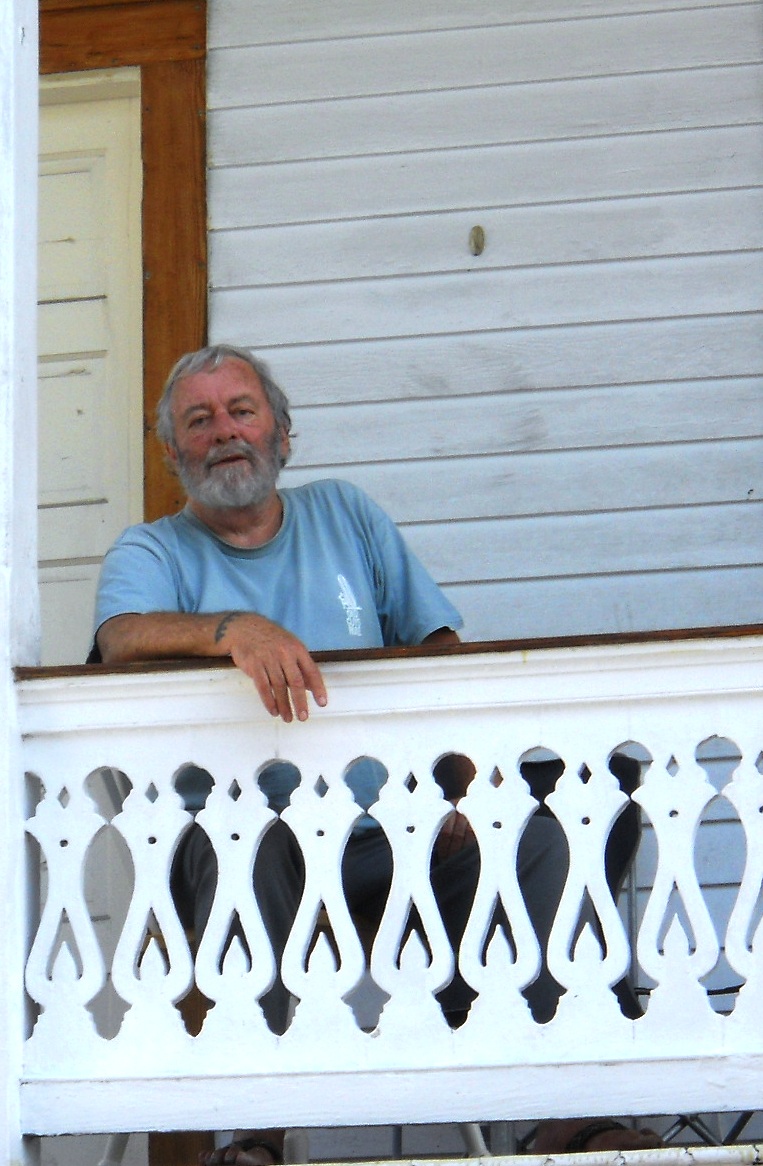
Key West Balcony

On the veranda of the old hospital, Key West. (Photo: C. Payne)

It is the contemporary curse of small-island resorts everywhere—incoming visitors. Here in Key West the frequency of plane arrivals picks up in the afternoon and builds through sunset and twilight. The final approach to the airport is right over Old Town. The bigger the plane, the louder the noise, the longer speech is pointless.

Connie and I are staying in Old Town, with our friends Bud Navero and Cindy Allison, just a block off essential Duval Street. The humble building where they live is on the National Register of Historic Places, the Louise Maloney Hospital, built in 1876, the first private hospital in Key West. On the second floor there is the original operating room, with lots of tall windows and a cement floor with a central drain. Sitting on the upstairs front veranda, we wave to the tourists going by on their cute little tour trains, and they wave back. Just a half dozen blocks away the cruise ships off-load their crowds of day-visitors.

The first Europeans here, Spaniards, called the island Cayo Hueso, “bone cay,” because they found so many human bones strewn around, an indigenes’ burial ground. Earlier dead tourists. Cayo Hueso easily became Key West when English speakers took over. Also it was the farthest west inhabitable cay. Yellow fever extended the funereal tradition among the white adventurers who replaced the original inhabitants.

From Some People Talk with God (Dominick Chronicles #2):

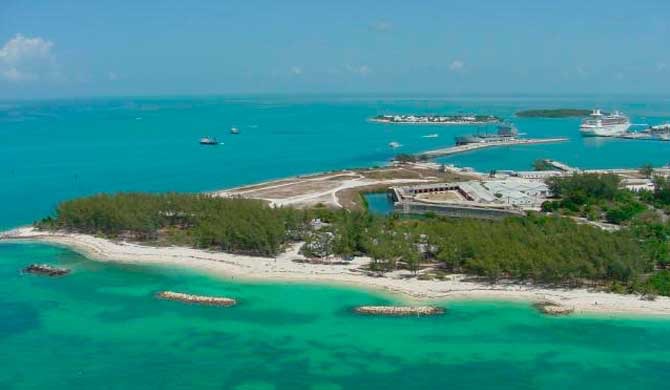
Dominick never got to go sailing, but after the first few weeks he did wander a bit, down to Key West to visit Fort Zachary Taylor right at the southern tip of the town and of the continental U.S. The South doesn’t get any deeper than this, Dominick thought, but Fort Taylor—and Key West—had remained in Union hands throughout the war. The fort had once been out in the ocean, surrounded by water, but now was surrounded by land and a partial moat. Its guns would now fire out over a state park and crowded beach, their only possible targets passing cruise ships. This fort, like Fort Ward, had never seen any hostile action. Its ten-inch guns had never been fired in anger. The deaths here had all been from yellow fever.

Fort Zachary Taylor

Fort Zachary Taylor

Like its sister site of Floridian history, St. Augustine, 500 miles to the north, Key West is an intimate place, inauspicious in modern demographics, with fewer than twenty-five thousand souls—not counting those just passing through. As an aesthetic city of refuge it has been home to many artists and musicians and such writers as Ernest Hemingway, Tennessee Williams, John Dewey, Shel Silverstein, Stuart Woods, and our host Bud Navero, author of the unfailingly entertaining Key West Confidential.

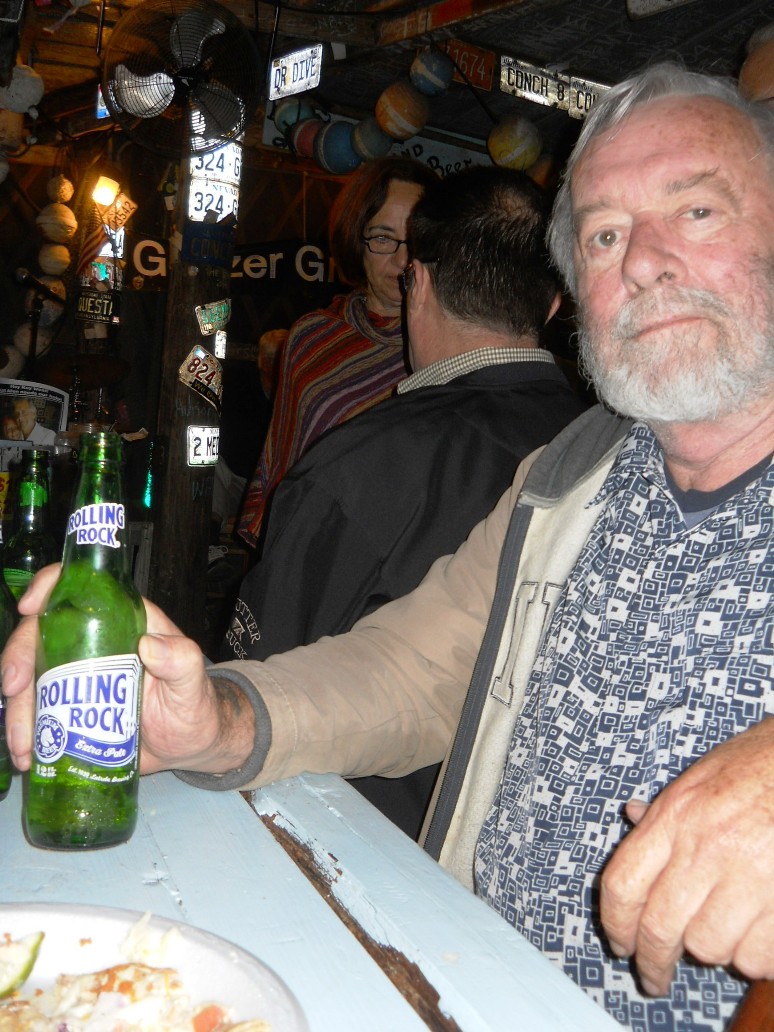
Thanks to Bud and Cindy, we have had an insider’s tour of Old Town, a highlight of which was singing along with Barry Cuda and Chief Billy of Bong Hits for Geezers at B.O.’s Fish Wagon on Caroline Street. It was a chilly Saturday night, down in the 40s, and there are no walls at B.O.’s Fish Wagon. It was a rare night for the locals to sport the layered look. How many T-shirts can you wear at one time?

As gentrification and the commerce of transients metastasize, Old Town Key West, as land of the free and home of Bong Hits for Geezers, will slowly slip into history. Charm mutates, and the past glows sunset golden for us geezers. But the place still jumps with energy. The streets are alive with people happy to be here. And the young are as beautiful as we ever were, nostalgia be damned.

At B.O.’s Fish Wagon (Photo: C. Payne)

At B.O.’s Fish Wagon (Photo: C. Payne)

The Keys – Part 3

Underwater ChristThe following short story, “The Keys” © John Enright, is from “The Disease of His Need for Women & other stories.” It has been serialized into three parts. This is part 3.

The family reunion went downhill from there, but it didn’t last long. It’s amazing how quickly some people can pick a fight. It was obvious Bengy didn’t want them there. Polly had been hoping that her brother would lend them some money to help get them set up somewhere in the Keys. The family story she had heard was that Benjamin had gotten into the real estate business and was doing quite well in Florida. The trailer smelled like the den of a yeti or some other undiscovered beast. Bengy insisted that they all have a drink to celebrate this auspicious moment. Norman, who never drank alcohol, declined. That was all it took. Bengy went off, sort of forcing himself into a tirade. It started with him mocking and insulting Norman. Then Polly defended him, giving Bengy his opening to turn on her. A lot of old family bile was spewed. Polly knocked something over—there was little spare room in the place with the two of them in it. Bengy smashed a bottle and waved its jagged edges at Polly’s face. Norman instinctively stepped forward to grab his arm, and Bengy turned on him, slamming him against the door. Bengy was holding the broken bottle against Norman’s ribs and screaming at him when Polly smashed her brother over the head from behind with a big bronze Buddha, and it was over.

Polly was so pissed she insisted on tearing the place up, looking for money. “That asshole owes me,” she said. Bengy was still on the floor where he’d landed. He hadn’t moved, but he seemed to still be breathing. All Polly could find was a couple of hundred bucks. When they left there were still no neighbors around. They headed south, for Key West. About ten mile markers down the road, when Polly began to breath more evenly and the almost perfect circles of red on her cheeks had faded, Norman dared to speak. “When he comes to he’ll report us, won’t he?”

“Of course he will, the prick.” Polly was looking out her side window.

“I don’t need any more jail time.”

“He never saw the car. He doesn’t know what we’re driving. I’ll think of something.”

Norman had never seen more cop cars per ten mile stretch than he saw along that stretch of US 1—local cops, sheriffs, state troopers. Everyone was doing the speed limit. So he did too. In Key West they checked into the cheapest motel they could find, near the navy base, as Mr. and Mrs. Leonard, a name they’d never used before. Two days later Polly had changed her hair color to blonde, sold the car, and told Norman to grow a beard. Norman didn’t like any of this, especially selling the car, there at the end of the last highway. “We need the cash,” was all Polly said. She was concerned about running out of money to eat. “There’s a ferry back to Miami. Don’t worry.” She went out that night to see if she could turn some tricks in the nearby bars. “I might have to come back here,” she said as she left.

“Just call first. I’ll be gone.” Norman was watching TV, channel surfing, looking for something totally distracting, but he noticed that he kept coming back to the local news station, just checking in as if waiting for a message. Around one a.m. the message arrived: Murder at Tavernier Key. Responding to an anonymous phone call, police had found the body of retired Catholic priest Benjamin Churchward in his burglarized residence. “You call that place a residence just because he was a white priest?” Norman said back to the woman news reader on Channel 9. “If he was just some black dude in that funky trailer park, it wouldn’t even be news.”

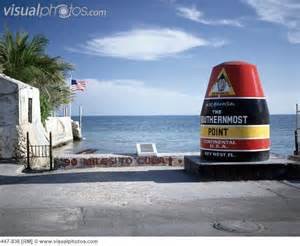
The news did not please Polly when she returned an hour later. She started to cry and couldn’t stop. It got so that all Norman could do was leave. He walked down to the big painted marker where US 1 ended, declaring this the southern most spot of the continental U.S.A. At three a.m. there was no one there. Norman picked his way in the dark down to the edge of the water. Back up on the street a cop car cruised by. Norman had never learned to swim. That had always embarrassed him, just another hidden hint of his helplessness.

The next afternoon they were on the ferry north to Key Biscayne and Miami. Polly looked terrible. She never looked her best as a blonde, and her big face was all puffy from a night of weeping. The sunglasses didn’t hide much. Norman could tell she didn’t want to talk, and she thought they shouldn’t be seen together. So he spent most of the ferry ride—except for a squall that they passed through—by himself up on the prow of the boat. Back in the motel room Polly had split the cash they had left—$1375 each. It was after dark when the ferry’s engines slowed as they approached the dock in Key Biscayne and Polly was standing beside him.

“I’ve decided,” she said. “I’m going back for the funeral. You gotta head in some other direction.”

“Polly.”

“He’s family. I killed him. I gotta go back. I killed a priest, Norman. It doesn’t get much worse that that.”

“Polly.”

“My brothers and sister will be there. Now wouldn’t it look suspicious if I didn’t show up? You know, before, when he was alive, I was free of him. But now that he’s dead and I killed him, I’m like his slave forever.”

Key West southern marker

There was no goodbye hug or kiss. Norman was one of the last passengers off the boat. He stood on the dock for a while, clueless as to which way to go. This was the sort of freedom he hated, the freedom of outer space—his future as empty as his past was full and forgettable.

The Keys – Part 2

Overseas Highway 2 The following short story, “The Keys” © John Enright, is from “The Disease of His Need for Women & other stories.” It has been serialized into three parts. This is part 2.

Polly’s brother’s address was off mile marker 94 on the Keys highway, which Norman had figured out meant 94 more miles before the end of the road, US 1, at Key West. Mile marker 94 was on Tavernier Key. He followed Polly’s directions as she read them, down a few lazy sandy streets until they found themselves in a gated trailer park—one of those home trailer parks where none of the trailers have wheels any more and all of them are up on cinder blocks, forever in off the road, with creeper vines and bougainvillea overcoming them. “Have you ever noticed that nobody ever goes to the trouble of repainting a trailer?” Polly observed.

The place reminded Norman too much of a slew of things he was always trying to forget. That double-wide back there, for instance, was twin to the one where he had last seen his kids back in Kentucky. That Pontiac surrendered to the weeds across the road was the same vintage as one he’d left behind somewhere once. He expected to hear a baby crying, but it was all still. No one was up and about. “Let’s not do this,” Norman said. “This isn’t anything like what you said it was going to be.”

“Hell, we’re here. It can’t hurt to try. You stay here. I’ll do it.” But Polly didn’t get out of the car. “You said I looked pale. Should I put on some makeup?”

“Do you think he’d notice at this time of day? Do you think he’d care?”

“It is sort of early still, and I did think his place would be a bit more palatial than this,” Polly said, still sitting there.

“Well, let’s not do it then.” Norman started the car back up.

“No. Fuck. I’ll go. I just forgot how much I dislike the bastard, that’s all.”

After Polly got herself out of the car, Norman—on pure unthought instinct—backed up and turned around and got the car pointed out of the trailer park and parked on the shoulder beneath some low trees near the gate. He had never met Polly’s older brother Benjamin before and he had no intention of doing so now, unless he had to.

It was only a couple of minutes before Polly came back. “He’s in there, but he ain’t answering. I’m not doing this alone, you shit. Come on.” All Norman knew from Polly about brother Benjamin was that he had been momma’s boy by becoming a priest, thus giving momma the trump card in her small Catholic Pennsylvania town. Then he became an ex-priest or a retired priest or an exiled priest or something. Polly never talked about her family much. Neither did Norman. There was a lot of painful shit in their pasts they didn’t talk about much. What was the point? It wasn’t like there were any lessons to be learned from past fuck-ups. The next one was always different.

Polly’s earlier knocking must have woken Benjamin up, because at her first knock this time he opened the trailer door. He was a big man, bigger even than Polly but along the same lines. He was bald and clean shaven and round. He had a sheet wrapped around his rotundity like an amateur’s toga. He was holding a gun, a large hand gun, as suited his size. As he swung the door open he said, “Come and get it, you assholes.” He stopped when he saw Polly standing there on the cement block stoop.

“Yes, Bengy, it’s your little sister Polly come to pay a family visit,” she said, never taking her eyes off the gun.

Father Benjamin lowered the gun, and with it the sheet slipped down on his chest, revealing a rather unmasculine nipple. He stared at his sister for a full minute, never seeming to see Norman behind her, then said, “I thought it was someone else,” and turned and walked back into the dark interior of the trailer, leaving the door open behind him. Polly didn’t follow him in. Norman slipped to the side, further out of sight. Polly and he had pawned their last gun a week or so before. Family. See what I mean? Norman thought. Just leave them alone. It’s like an impersonal curse. He didn’t even have a knife on him.

“If this is a bad time, we can come back later,” Polly said into the darkness.

“Who’s we?”

“Just me and Norman,” she said.

“Who’s Norman?”

“Look, Bengy, forget it. We were in the neighborhood, and I thought I’d stop by to say hello, that’s all.”

“No, you’re here. Come on in. I’d like to meet this Norman. But give me a minute to get some clothes on.”

The Keys – Part 1

Overseas HighwayThe following short story, “The Keys” © John Enright, is from “The Disease of His Need for Women & other stories.” It has been serialized into three parts. This is part 1.

It was as good a night as any to be made memorable. The high yellow street lights along the boulevard a few blocks away had become just backlight to the sudden fog silhouetting rooflines and palm trees. If you look this way it’s Africa, she said. If you look that way it’s Mexico. She had never been to Africa or Mexico. Neither had he, but she was right. A mist rose from the pool as well, where the water from the hot tub spilled into it. Everyone else at the party had gone home or to bed. They had no place to go. An opossum slunk its way along the pole top of the chain link fence between the lawn and the man-made waterway, ignoring them. They watched it, uncertain at first in that pointillist light what it was, then they saw its tail and agreed. They were through with arguing for the night. They had made it through that stage.

Norman walked to the edge of the swimming pool. The underwater lights were still on so that it glowed like a big blue jellyfish. “So we do this, then what?” Making decisions was not one of Norman’s strong points. He used the excuse that when he was born the sun, the moon, and four planets had all been in Libra. Polly was used to it. “Then we see what happens next,” she said. Polly shifted her weight onto one large haunch and tucked the other leg up under her on the padded patio chair, “as always.”

“I dunno,” Norman said. He was still standing at the edge of the pool, staring into its chemical blue murkiness. Several empty beer bottles had rolled to its deepest point. He unzipped his fly and pissed into the pool. “There’s like too many suppositionals in the proposition.” But ten minutes later he was finding his way out of that pretence of a community, looking for signs to the turnpike south. Polly was in the back seat, under a blanket. “Wake me when we get close,” she said.

Polly filled the whole back seat. She was a big woman, always had been. Polly had never been anything like petite. She came from big people, “big boned” as they said these days. As long as anyone remembered, Polly had dressed in muumuus and mother hubbards. She’d never owned a pair of trousers or shorts. A funny thing about that—since she had never been “normal” size, she had no issues about her size. She was just an XXLady, as sexy as the best. In addition to pants, she never wore underwear. She liked to think that she was always ready, and her body really was quite beautiful once you got used to the scale of it.

As her default man Norman knew that body fairly well. It had been some years now. It was one of his few remaining comfort zones, as one by one the rest were taken away from him. Polly was a constant, like gravity or waking up in the morning. Norman knew that other people thought they made an odd couple. He was Abe Lincoln long and thin—though clean shaven—and as reserved as Polly was out there. She had once asked him if he would mind not looking like some Southern sheriff making a bust when they were out together. He had all the features to be a handsome man, but he wasn’t one, and he knew it. He liked to drive, though, and within half an hour he’d found the Florida Turnpike south. Polly slept on as he searched for something different on the radio. He remembered again Hemingway’s line about beautiful women needing lots of sleep. At three a.m. there was nothing worth listening to besides Polly’s soft snoring behind him. He drove, his transcendental state interrupted only by toll booths, then quickly restored by a return to the passing lane. At dawn he was crossing the first bridge to Key Largo, and Polly woke up on her own. “Piss stop,” she said.

Norman had never been this far south before, but it wasn’t like Alabama or Mississippi, because it was touristy. Money and non-Southerners moved down this road. You didn’t see this many t-shirt and bikini shops in Opelika. They had breakfast and a piss stop at a Taco Bell. Polly had coffee and two burrito supremes. She looked fresh and ready. Norman swallowed two more speed-em-up pills with his taco and Diet Sprite. “So, you know where we’re going?” he asked her.

“I got an address,” she said. “He gave me directions once when he was drunk and being sloppy over the phone.”

“When was the last time….” Norman had a habit of not finishing sentences because Polly usually finished them for him.

“I haven’t seen him in eight, nine years. Whenever mother died. At the funeral.”

“Oh-six,” Norman said.

“Whatever. Before he retired and moved down here.” Polly’s hair was red this season, something between cherry and blood, and she had it cut short. This morning she looked like a butch pixie. “What are you looking at?” she asked.

“I was just thinking that you need some sun, that’s all. You’re getting sort of pale.”

“You think they got nude beaches down here? I don’t want no tan lines.”

“I don’t think we could afford them.”

“Tan lines don’t cost anything.”

“I meant the nude beaches.”

“Now, isn’t that funny? Tan lines are free, but no tan lines can cost you something.”

“I guess. You done?” Norman started picking up the surprising amount of trash they had created just eating breakfast.

“Leave it,” Polly said, getting up. “They got nothing else to do.” And it was true. There were no other customers at that hour, and the behind-the-counter staff were all just standing there, watching them. Polly gave them a big smile and a wave and an operatic ‘thank you’ on the way out. “Those kids get no tips,” she said. “It’s a shame.”

The Other America

Gun1As an American, how much am I defined by the news? Even on the road I can’t escape it. This past week the crime de jour was the assassination of three young Muslim students in Chapel Hill and the act’s alleged perpetrator Craig Stephen Hicks. The names of the innocent are always eclipsed by that of the killer’s. The grotesque grabs our attention. I find myself contemplating Mr. Hicks, wondering what kind of man feels it necessary to carry a gun to a conversation with a neighbor. It wasn’t his first time. An ugly American, a make-my-day American? What sort of person needs to announce I am a lethal force? How insecure and fucked-up is that? Connie suggests that anyone sick enough to feel the need to carry a weapon should be put at the top of the list of those proscribed from doing so.

The America I meet on the road is quite different from the America seen in the news and on TV. It is a land of pleasingly friendly, cordial folks, ready to smile and engage in a chat. Given the opening, perfect strangers will show you family photographs or share the news of their most recent medical dilemma. They wish to be liked, not feared. Amicability is their default mode. They love their pets, and very few own pit bulls. The Second Amendment means little to them.

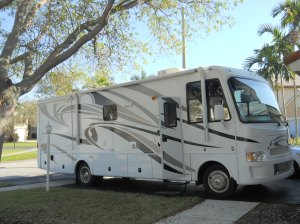
My brother Jim and Rita arrive in Pembroke Pines in their camper. They are true snowbirds. Every winter they leave home up near Lake Ontario and head south for the season. They are retired. For several decades, Jim was Catholic chaplain at the maximum security penitentiary at Auburn, New York. He liked the job, its challenges. He has always been that way, always looking for something to do, some new project. This year he has a new camper to play with as he and Rita wander from campground to campground, happy gypsies in the real America.

new van

Jim & Rita’s new camper (Photo C. Payne)

One might think, given the constituency of Jim’s clientele for so many years, that he would be part of that other America, the one fueled by fear and suspicion, fed not only by the tabloid news but also by personal experience. One would be wrong. Jim delights in people and their stories. It was no accident that he became the prison system’s go-to point man in hostage situations, the expert at reaching peaceful resolutions. He tells fond stories of his prison staff of murderers. There are no guns in Jim and Rita’s camper.

Yes, among the 320 million people in this country there will always be a smattering of Craig Stephen Hicks, but they do not define us. Far from it.