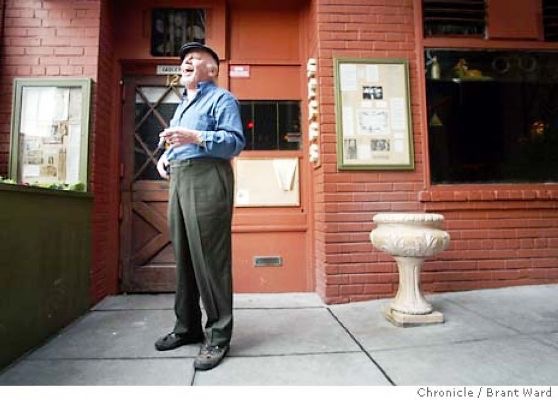
Specs’ Saloon, North Beach, San Francisco

Specs

Specs himself outside his saloon, having a smoke and a laugh, 2004

Someone observed about the Buffalo I grew up in that there seemed to be a church on every block and two saloons at every intersection. They were all filled with good Christians. The typical neighborhood tavern carried the proprietor’s family name—Strinka’s, say, or Topolski’s or O’Connor’s—and had two entrances, one to the bar in front and another family entrance in the rear to the dining room. As most of the city was Catholic, these family entrances got most of their traffic on Fridays around dinner time, because the tavern’s cheap fish fry was a housewife’s welcome alternative to stinking up the house with the smell of cooking fish. And it was payday.

It was a blue-collar world. A shot of schnapps and a draft cost you fifty cents. For many the corner barroom was like another room on their house—a room free of family and kids. There were no TVs above the bar, no sports channels, and if there was a juke box it wasn’t tolerated during prime drinking hours, dusk to midnight, and for half the year dusk came early to Buffalo. Patrons either quietly conversed or sat alone inside the blessed freedom of their chosen cone of silence, studying their drinks and cigarettes, communing only with themselves and maybe their reflection in the back-bar mirror behind its picket fence of whiskey bottles. Normally everyone there would be a regular, and after a while bits of personal history would become absorbed as common knowledge and the men and women behind the bar became not just the dispensers of self-medication but also the reference librarians of local lore and current events.

“I haven’t seen Murphy in here in a week.”
“It’s his back again. You remember his accident.”
“Did the union ever get them assholes to settle?”
“I guess they’re paying for another operation.”
“How’s his wife doing?”
“She’s off the drink, too, I think. Hasn’t been in. Want another?”

If Murphy didn’t make it, there would be a collection for the widow and the kids.

I entered this world when I was seventeen, and for the next twenty years—until I moved to Samoa—neighborhood bars, no matter where they were, would be my wayside chapels of peace and familiarity. If during that time the Catholic Church ditched Latin as its unifying language, corner saloons still spoke the same lingo of escape and observed a consistent liturgy of nonjudgmental sanctuary, filled with your fellow faithful. Homes away from home, the other room to your ancestral house that you could always find if you walked the streets and could interpret the neon semiotics of barroom windows.

I spent several years visiting, photographing, and researching the scattered remaining historic saloons of the California Gold Rush and Nevada Mother Lode country for a book I never wrote. I used to pride myself if plopped down in a new town—at a Greyhound Bus Station say—of being able to find on instinct the nearest convivial watering hole. I wonder how many thousands of such places I’ve walked into, just a stranger coming in the door and taking a stool at the bar and ordering a drink. Just do it right and nobody will ever question you. It is like entering a church and dipping your right hand into the holy water font and blessing yourself and genuflecting properly before the altar. In twenty years no one ever challenged me or tried to pick a quarrel. From Hong Kong to Belfast, in twenty different countries and every state of the union the sacrament was the same.

And so it was in North Beach where I found Specs’. I never lived in that part of San Francisco, but Specs’ became my neighborhood bar. I am a tad superstitious about talking about Specs’, because the place, which absorbed me forty years ago, is still there, just off Columbus Avenue on old Adler (now Saroyan) Alley, unchanged, ungentrified, and I am afeared to jinx its existence by writing about it as history. (Is this aging, when you begin to feel some responsibility for the past, some complicity with its integrity and survival?) I moved often in those years, both around and away from the Bay Area, but Specs’ Museum and Saloon remained a sort of borrowed nexus, the place where people could find me if I was in town or leave messages for me if I wasn’t. A place to find connections for work or the next apartment to rent or a new lover. But mainly it was a place to talk, a bohemian wayback machine. Again there was no TV set in the place nor a juke box. The bartenders were Irish maestros of gab. I made some good friends there, folks always ready to pick up the talk no matter where it had left off, folks who just wanted cohorts and a space to enjoy the end of their day.

A number of years ago I stopped in Specs’ on my way through San Francisco to somewhere else. It had been three or four years since my last in transit visit. I hung out at City Lights Books across the avenue until Specs’ opened after four. I took my old seat at the end of the bar between the front window and the reading lamp and opened a book I’d just bought. The bartender, a younger man whom I’d never seen before, was busy setting up the bar for business. I didn’t bother him with an order. All the memorabilia of the bar—the flags and shark jaws, old union posters and ironic signs, scrimshaw and Inuit art, framed newspaper headlines and eclectic photos—were all still in there proper places, all sepia stained like Civil War prints by decades of cigarette smoke. Then a green sixteen-ounce can of Rainer Ale appeared on a coaster in front of me. Green Death we used to call it, the strongest, most assertive brew you could buy there, the usual opening drink of the old sundown regulars thirty-five years before.

“What’s this?” I said to the unknown barkeep.
“You’re Enright, aren’t ya?” he answered, straight out of Dublin. “And that’s your usual, ain’t it? Where ya bin?”

I came back late that night, before closing. A different crowd, all younger, only a few of the old, hobbled and roseola-nosed regulars left. I came back to see the eponymous proprietor Richard “Specs” Simmons himself, who, dapper still in his 70s, would stop by to judge the closing crowd. We were glad to meet. We sat at a table near the front and talked the present about the past, as men will, catching up on people and their personal events—Deborah’s kids, Marilyn’s last known success, Kent’s funeral. Since my previous visit San Francisco had passed a law against tobacco smoking in all public places, including saloons, and now the dead-end pedestrian alleyway in front of Specs’ often held the best conversations, as smokers followed one another outside, placing coasters on top of their drinks on the bar. But when Specs lit a cigarette without moving from his table, I did too.

“It’s my place, after all,” he said. “If anyone wants to file a complaint, then fuck ‘em. They’re eighty-sixed forever and may they remain eternally childless.” He took a drag. “And I’ll gladly pay the fucking fine.”

Usual Group at the Window Table
____________________

How in Westerns the wheels of the wagons
always spin backwards the faster they go,
how ice and flame at first touch feel the same.
Take a pint and a seat by the window.

If all my sins were confessed in Islam
my body would have no extremities.
What do you call what you want to forget?
Take a pint and a seat by the window.

There are faults in the sky that insult me,
slick birds with no wings that call themselves souls.
Without your lost beauty no one knows you.
Take a pint and a seat by the window
Heisenberg und Heimatlos

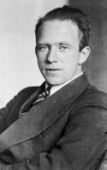
Heisenberg

Werner Heisenberg

Yeah, and sometimes reality salad sucks. Yesterday the landlord stopped by to tell us our time here is up. It’s been almost eight years, but the family needs the cabin back, the next generation asserting its priority. Time for the gypsies to move on along. That’s life for a renter, and I have never been anything but. The biggest thing I have ever owned was a pickup truck. I don’t get to use words like equity or liquidity. It’s cleaning deposit and last-month’s rent.

I have no idea where we will go. We can’t afford much locally. Again we are faced with the imminent uncertainty of being homeless. This was more entertaining forty years ago, when uncertainty still held some sense of adventure. And at our age—freshman septuagenarians—there is a certain moral stain attached to not having our fiscal and domicile acts together, surrounded as we are by peers safely cushioned by their savings and entitlements and homes.

Werner Heisenberg is, of course, best known for his uncertainty principle, first introduced in 1927, which in its simplest version states that the more precisely the position of some particle is determined, the less precisely its momentum can be predicted. The metaphoric existential applications beyond quantum mechanics are enlightening and reassuring. Uncertainty is a given. You can’t predict where you will be from where you are now. For all living entities the sole certainty is death. If you are a renter don’t go feeling secure. Shit happens.

Olson’s line: The only thing that does not change / is the will to change.

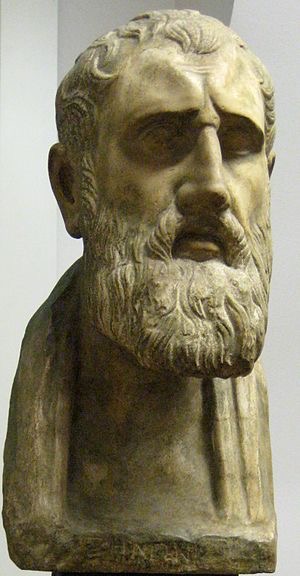
Zeno of Citium

Zeno(letter to Michael Joyce)

Mika:

It is popular and easy to pick on the American male psyche, its blind spots and delusions (e.g., TV ads). We all know who we are and to what extent we replicate the typification. (Robin Williams to Nathan Lane: “I didn’t know John Wayne walked that way.”) It’s a camouflage we all learn young, and some of it grafts into personal armor. Fate knows that we have all escaped bad situations by pretending to be brave and have acted the total dolt in matters hormonal. But tonight I would like to signal out one trait of that cowboy outfit for acknowledgement–Stoicism, no matter how tepidly preserved.
Ranger Zeno of Citium, please step forward; yes, you there, the one not paying attention.

Veterans won’t talk about their wounds. Baseball players cannot rub the spot where it got ’em. Hockey players aren’t allowed to cry. I can get by with, I got out of the hospital Friday. We’ll see what the bill will be. Gotta love it. Home, convalescing, a basketfull of pills to take. No big deal. At the end of how many half-hour shows was Hopalong “just winged,” with his arm in a casual sling as he rode away into the credits? A couple of slugs of saloon rotgut were all the Duke needed before going under the dirty doctor’s knife. “No pain, no gain” bullshit.

I have been in pain as long as I can remember. Pain has been a constant companion, and mostly a secret stalker. It was just another thing to hide. I don’t want to go there tonight, to examining life as a list of what I’ve had to hide. (Although, that is an interesting idea.) I’m just glad I don’t have to talk about it. Besides, I’d misspell a bunch of the med terms and drug names, and, really, who cares? It’s no autopsy.

Of course, a true stoic would also be given to showing no interest in joy as well as in pain. Did they see the difference and manage to treat them the same? Or was it just an emotive control thing? They were all Mediterraneans, after all.  It was no joke in my Irish family that emotions were things that other people had, like Italians. (So I married one.)  But I like our customized American version of masculine stoic, where good shit can be acknowledged but not featured. Pass out the cigars; no need for the obstetric details.

I have again escaped the tubes and needles, and it is Act One of Another Spring. We’ve rehearsed this ten thousand forests before–the dead gray dirt rises up and covers itself then everything else in a verdant blanket of dense, frantic reproduction. Mind-boggling every time.

The stoic accepts what is. The sage is the one with the fewest illusions. I am dying. But I am going to take my fucking time about it. So may we all.

Ioane

Tough Guys

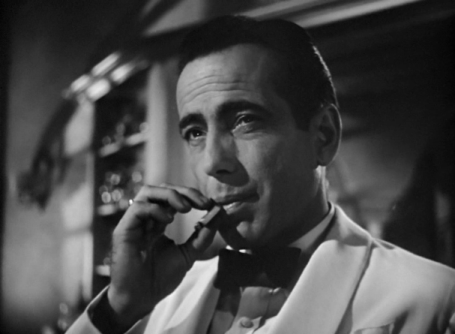
Humphrey Bogary “He looked at me as if I was a cigarette stub, or an empty chair. Just something in his line of vision, without interest for him.” (R. Chandler, The Long Goodbye)

Immersing myself in old-shelf Hammett, Chandler, and Cain, their folk art, indulging the Bogart in me. At the local public Jamestown Philomenian Library (no one knows what that middle word is supposed to mean) the separate shelf space for mysteries is almost as large as the shelf space for all the rest of adult fiction. I wonder why I stayed away from it so long. There are even large-print editions of some of the classics, for us old folks, who remember the original editions.

Sure, the plots are familiar, but the plots aren’t really what the stories are about. They are all about self-knowledge—not deep self-knowledge, just a sure awareness of what’s coming down and how ego—the personal third-person, hardly omniscient narrator—will react to it. The goal of each story is our man not having to alter or even seriously question—much less apologize for—his sense of himself. The ones that get roughed up are the best at this.

You got to like these guys. Shamus surely should be a cognate of shaman. Anchorites on the edge, approached only for their special knowledge and extra-societal competence. The rules are made to be broken. I glimpse features of Amerindian trickster heroes here—coyote unbound by politesse—and the Wild West tall-tale. An American hero, someone your wife would never invite twice for dinner. That dangerous friend.

The only way to solve a mystery is to become caught up in it. And, of course, the babes are always young and comely, decked out in bespoke Hollywood innocence, but always with their own agendas. Lashed to the mast of his low-life craft, our man is tempted but does not yield. Babes are nothing but trouble. The streets are noir. There is no gore. The dialogue is repartee.

Like the words on the page, it’s a black and white world, but with shades of gray in the best. Those are a sort of history, snapshot albums of an American time when men wore fedoras and cars had running boards. Chandler’s Los Angeles and Hammett’s San Francisco are more real than what is there today. The Greatest Generation Tom Brokaw called them, the tough guys. Once they were role models, cigarettes and all.

Our Fear Of Food

Eating raw

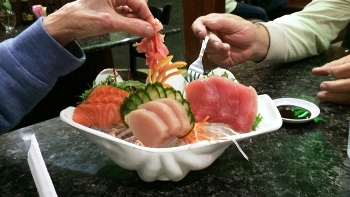
Eating Raw (Photo: L. Ellis)

Along with all the other things that today’s Americans have been trained to fear—Arabs, microbes, liberals, aging, immigrants, erectile dysfunction—is food. Food prejudice has become so common place as a personality trait that there is a full Internet smorgasbord of groups you can choose from to join of like-thinking devotees to your particular anti-taste.

Certainly, food taboos are as old as indigestion. Leviticus raised diet no-nos to an alchemical art form, with abominations based on abstract theories of the pure and the impure. Why is it again I can’t eat rock badger? (Did Leviticus suffer from a gastro-intestinal complaint? We know that Martin Luther was tortured by constipation.) Sure, lots of it made sense—Uncle Fred ate that and died. Every species figures out what it can and cannot eat. Nothing mystical or even mysterious about that. But the secret to our species’ frightening success is its rare and wondrous feat of being omnivorous. We even learned how to leach and cook the bad stuff out of poisonous food.

One of the revelations that remains with me from Stephen E. Ambrose’s wonderful saga of the Lewis & Clark Expedition Undaunted Courage is the description of what the expedition members ate on their multi-year trek. For weeks it might be just meat—bear or buffalo or horse or dog—then just foraged roots and berries for a while. Hard tack biscuit and salt beef for a spell? Fine. Those guys would eat (and drink) anything, and none of them died from their diet.

I was certainly raised to eat whatever was put in front of me. Sure, I had my favorites, but I did not pass the turnips without taking some. They weren’t punishment; they were food. Nothing to fear. Put some butter on them. Growing up, I never knew anyone with a food allergy other than lactose intolerance, which was a drag because she couldn’t eat ice cream. Nothing to brag about there. Nobody passed on the peanut brittle. Of course, our diets were limited. Our Irish American mothers never cooked Italian, for instance, which is why pizza places were such a hit when they arrived in our teenage years.

My first introduction to food as something other than just food came in the home of my name-same uncle Dr. John Enright, a family doctor (they weren’t called practioners yet) in Buffalo. I was maybe ten and was there for dinner. Uncle John would borrow me now and then because he had just girls. Reconstructing the scene from facts gleaned later in life, I think Uncle John had discovered the recently available Oesterizer blender and was experimenting on his family’s digestive systems by serving them food that they did not have to chew. On our plates were three mounds of mush—brown (meat), green (veggie), and white (carbs). I ate it, but I thought it was weird. I thought maybe I should be blind-folded as well, then led back to a cell.

Beggars can’t be choosers is among the most blatantly true clichés. And you can be on a socio-economic rung or two above beggar class to personally attest to the fact that the hungry can’t be picky. I do not want to look up the U.N. number of how many millions of children went to bed hungry tonight. (I get up to fix myself a snack of cheese and crackers.) Facts like that stop everything, and I do not want to stop. I want to go on about this fear of food thing. I just wanted to remind us of the reality, of the fact that our parents and their parents and theirs back to our let’s-get-out-of-the-trees ancestors were thankful for their daily gluten, for whatever they could get to eat. And happiness was going to bed with something in your stomach besides empty rumblings.

Fear. What a powerful cultural force fear is. If you can control what people fear, you can control them. Human communities were born because of fear and its perceived countervailing safety in numbers. A savage was once sauvage, just someone who lived outside the walls. The fear of death was used to ritualize and control the lives of our predecessors. Fear—fight or flight—and its resultant pheromones are as basic to our nature and survival as the reproductive imperative and its raging hormones. Only, fears are learned, and they are contagious. There are both rational and irrational fears, but the defining adjective does not alter their efficacy.

We have a word for irrational fears—phobias. The suffix phobic has become as familiar as backward baseball caps in America. As our contextual world has expanded, so has the universe of things to be afraid of. In some ways our phobias have come to define us. I know a woman who will not fly on any airlines with the word west in its name. Another friend, a nice guy but a filthy-lucre germaphobe, will not touch money. Perhaps it is because we are already protected from so many real dangers.

Food phobias constitute a special case, though. If we fear what we eat, and we are what we eat, does that make us fear itself?

The Storage Story

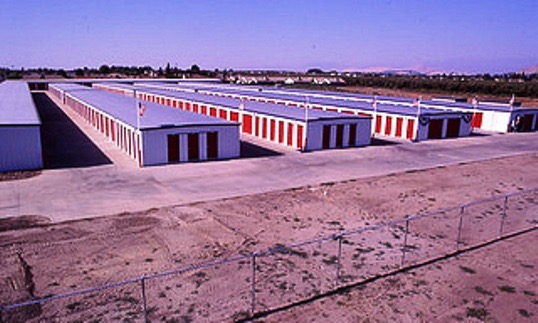
StorageAny meditation on the current state of our nation should include consideration of the recent ubiquity of self-storage facilities. On our recent Eastern Seaboard sojourn I was surprised by the frequency and size of them along the highway. What’s going on? Are we as a nation storing up goods essential to our survival in an imminent Armageddon? Are these ominously boring sites the nuclear age equivalent of our ancestors’ grain silos? Will they save our tribe from starvation and annihilation? Are these the safe-deposit vaults in which the aesthetic prizes of our dominant civilization will be preserved for a kinder prosperity? Or are they evidence of yet another weird twist in the evolution of a society obsessed with the obesity of ownership?

There are now more than 50,000 such warehouses for personal goods across the country, offering Americans close to two-and-a-half billion square feet of rental space in which to stash the shit they can’t fit into their already stuffed houses and garages and backyard storage sheds. In spite of the fact that the size of the average American home has doubled in my lifetime, one in ten households now feel the need to store their excess elsewhere.

Or is it that simple? The earliest such storage spaces, in the late nineteenth century, were for the metropolitan rich—basically well-guarded buildings where the Gilded Agers could safely place their valuables while they were travelling or away at their vacation homes, a cool place for their out-of-season furs or that extra grand piano. Art collections gathered there, heirlooms, and out-of-fashion antiques. Think the end of Citizen Kane. An ancillary attic of the rich and famous, an expensive perk.

Today’s roadside facilities have no such white-glove pretentions, and the class they attract is not the mansion set. Who are they then? Many are victims of what sociologists call “life events”—divorces, foreclosures, sickness, deaths in the family, job dislocations, bankruptcy. For some a rental storage unit is just a temporary measure as they get their life, hopefully, back on track. For others it is the end of the line, for whom even the monthly storage rental fees become more than they can pay, and they walk away, leaving what they have saved of their lives up for forfeiture and auction. In one way these facilities are the ultimate pawn shops, testimony to the new transient uncertainty of life for the working class.

But for many other people a storage unit is just a place to stash the crap they can’t bring themselves to trash. Other species hoard, but usually just things to eat. We started out as hunters and gatherers. Few of us now hunt to eat, and our instinct for gathering has little to do with sustenance. We gather now to identify ourselves by what we possess. Property is status. We even invented a “right to property” to sanctify our accumulative lust. Stuff is us. Don’t give it up.

The potlatch customs of indigenous Columbia River nations enraged early American immigrants. Here a prominent family would assert its status by divesting itself of what riches nature—and the salmon-rich river—had bestowed upon them in a grand show of largesse and self-diminishment. A truly Satanic impulse! But even those first Anglo invaders brought with them only what they needed. True excess consumption was yet an American dream.

On one website I read an exchange among militia survivalist types about what to hide in your storage unit—stockpiles of provisions and ammunition up front (keep the weapons ready at home)—in preparation for the ultimate property fight. But padlocked behind most of those folding steel doors is the past, not the future, what Americans don’t need but don’t want to give up. When it comes to stuff, you can’t take it with you, but you can leave it for someone else to deal with.

What Would Buddha Do?

Buddha

Solitaire Definement

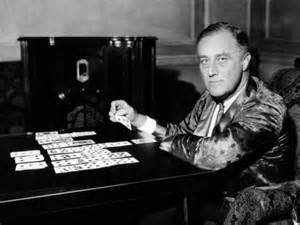
FDR playing solitaire A couple of weeks ago I saw a cartoon of a child watching her father play solitaire with a deck of cards. She says, “I didn’t know you could play solitaire without a computer.” I sometimes play solitaire on my laptop, a solitary vice but hardly an addiction. It could be a meditative exercise or a waste of time, or both. Sometimes when I am mindlessly clicking through the digital deck, I will be treated to vivid memory replays of scenes from my past, or a story plot problem will solve itself. I once wrote a short story about a game of solitaire that kept repeating, the exact same cards, time after time. Being human, I discover (mistaken) patterns in the order of cards and devise (pointless) strategies against randomness. If I play with troubles on my mind, I lose.

During one particularly egregious series of losses I came to wonder how many ways I could lose. On line I discovered the following:

How many possible games of solitaire?

A well shuffled deck of cards has a lot of possibilities. How many exactly? You can think of it this way. The first card you put down can be any one of 52 possible cards. The next card can be any one of the 51 remaining cards. The next can be any one of the remaining 50, and so on. This is expressed mathematically as 52! (52 factorial) possibilities for different arrangements of the cards in a shuffled deck. That means:

52! = 52 * 51 * 50 * … * 3 * 2 * 1 = 8.07 * 10^67
That’s 8 with 67 zeros after it. Which is a lot of possible arrangements for the cards. Think about it this way. Let’s say you took 7 billion human beings (roughly the number of humans on the planet today) and you had them play 100 games of solitaire each, every single day, for the next 10,000 years. In other words, the entire human race will be doing nothing but playing solitaire for 10,000 years. How many games is that? It’s:

7,000,000,000 * 100 * 365 * 10,000 = 2,555, 000,000,000,000,000 = 2.555 * 10^18
In other words, all of that solitaire playing does not even begin to put a dent in all the possible games of solitaire.

So, assuming well-shuffled decks of cards, it is quite possible that every game of solitaire ever played has been unique. If you shuffle a deck of cards, lay it out and play a game of solitaire right now, chances are that you are the only person who has ever played that particular configuration of cards, and it will never be played again.

That made me feel special. Participating in a 1 in 10 to the 67th event is as close as I’ll ever get to the infinite.

What are the odds of winning a game of solitaire?

The only way to answer that question is to play lots of games of solitaire and see what the average is. Fortunately someone has taken the time to do that. He claims that if you are playing normal “Draw 3 cards, keep going around deck” (Klondike) solitaire your odds of winning are roughly 1 out of 6 games. I don’t believe him, but then my laptop doesn’t let me cheat. Is there an app for that?