American Samoa a Century Ago

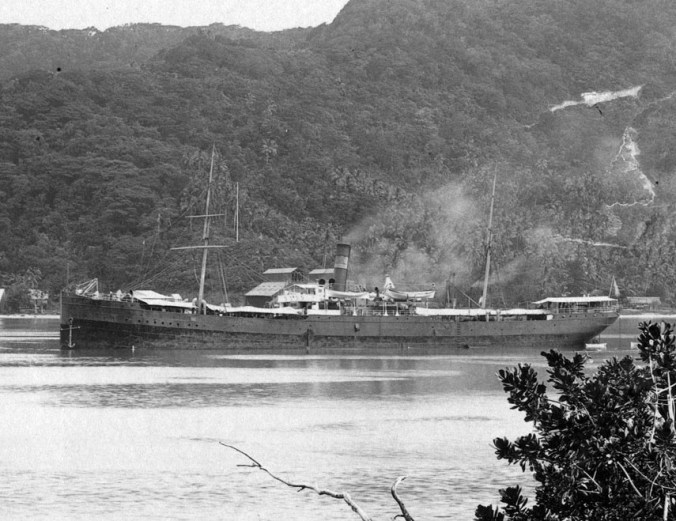
USS AbarendaUSS  Abarenda in Pago Pago Harbor, 1900

Karen Wheat is the author of a forthcoming book, Pictures of Change in Paradise at the Turn of the 20th Century, an annotated collection of photographs collected by her great great uncle Joseph L. Dwyer during his stay in American Samoa from 1907 to 1913. Karen asked me to write an historian’s end note to her handsome volume. It’s a bit long for a blog post, but I thought anyone interested in a brief introduction to American colonialism might be entertained. For a gripping and comprehensive description of this history see Joseph Kennedy’s The Tropical Frontier: America’s South Sea Colony.

Joseph L. Dwyer in Historic Perspective 

When the young Detroit lawyer Joseph Dwyer stepped ashore at the U.S. Naval Station Tutuila dock on Pago Pago Bay in May 1907 and found his land legs after five thousand miles at sea from San Francisco, he stepped into history—a backwater of history to be sure, but a place and a time that none of his peers back in Corktown would ever know. Out of every generation a few young men wander away from home, but very few venture this far away or into a culture from so distant an epoch. He was not yet thirty. One wonders what heartaches had set him free.

            Somehow Dwyer had gotten himself—a former navy yeoman—appointed by the Secretary of the Navy Josephus Daniels to be the civilian secretary to the commandant of U.S. Naval Station Tutuila, a commandant who also served as de-facto governor of the recently acquired isles. The U.S., after successfully subjugating all the native peoples of its continental territory, had only recently entered the game of global imperialism. The ten-week Spanish-American War in 1898 had almost effortlessly garnered Cuba, Puerto Rico, Guam, and the Philippines as stars-and-stripes territories. 1898 had also seen the annexation of Hawaii, and in 1899 the Treaty of Berlin had split the Samoan Archipelago into the suzerainities of Germany and the U.S.A. Dwyer was a factotum of the nascent American empire at the start of the American century.

            The first recorded European contact with Samoa occurred in 1722, when Dutch navigator Jacob Roggeveen sighted several of the islands. He was followed by French explorers Louis-Antoine de Bougainville in 1768 and Jean-Francois La Perouse in 1787. These were the astronauts of their era, going where no Europeans had gone before, sailing their culture’s most advanced vessels. Roggeveen named the islands The Navigator Isles, noting in his journal that the native crafts that came out to meet his ships sailed circles around him. He chose not to pause. Bougainville, too, sailed on by. La Perouse stopped to recharge his water casks and seek fresh victuals.

            On the north shore of Tutuila, in the now deserted village of A`asu, is a monument set up by the government of France to memorialize the dozen French sailors from the La Perouse expedition killed there in the initial meeting of Europeans and Samoans. “Massacre Bay” they called it. The monument is on the National Register of Historic Places. There is no monument to the 39 Samoan warriors who also died in that first meeting. For decades after, Western ships refused to call at the islands for fear of a similar welcome.

            The first European Christian missionary, Englishman John Williams of the London Missionary Society, arrived in 1832. Williams and his followers had a profound impact on Samoans and their culture. Other missions lead by the Catholic Church and the Church of Latter Day Saints followed. Samoans were thoroughly Christianized before the U.S. Navy arrived.

            The five small islands (total land area 76 square miles) of Eastern (now American) Samoa were high and volcanic with a population fewer than 7000 (99% Samoan) when Dwyer arrived. In 1900 when the high chiefs on the main island of Tutuila had placed their Xs on the Deed of Cession that had been prepared for them, they basically made a gift of their island to the President of the United States (McKinley at the time), who promptly turned their governance over to the U.S. Navy. It was the navy that had pushed for the acquisition, as they wanted the protected harbor at Pago Pago as a coaling station on the long voyage between Hawaii and New Zealand. Ironically, by 1900 almost the entire U.S. fleet had been converted from coal- to oil-fueled.

            In April 1900, the USS Abarenda—hardly a gunboat, but one of the navy’s few remaining colliers—arrived in Pago Pago harbor. Within a week the Deed of Cession had been signed and the American flag raised above the nation’s latest possession, its sole territory in the Southern Hemisphere. The Samoans were pleased to have Uncle Sam rather than the Kaiser as their new landlord, and the first commandant, Cdr. Benjamin Tilley, was diplomatic and made a good impression. By the time of Dwyer’s arrival seven years and three governors later, a proper naval station had been built in the village of Fagatogo adjacent to the dock and coal sheds. A small station ship that did double duty as a tug boat had replaced the Abarenda, but there were few visiting vessels. The coal, unused and not available for sale, had to be constantly watched and shifted to prevent it from spontaneously combusting in the tropical heat of the sheds.

            In America, the name Pago Pago had come to denote a place like Timbuktu, impossibly remote, the edge of the world. To the naval officers assigned shore duty at Naval Station Tutuila it must have seemed a demeaning posting—as if they could not be trusted with a real ship, real duties. Annapolis had not trained them to be civic officials. They had been trained to navigate, to fight sea battles, and to keep a disciplined ship. They brought what skills they had in human relations. They complained about the steaming climate and looked forward to their next assignment, wherever it was.

            The majority of the U.S. Naval officer corps at that time was from the South. Many of them maintained the racialist assumptions of their culture and background. (The U.S. Navy at that time was officially segregated. Not until 1942 did the navy begin accepting African-Americans for general service. There would be no African-American naval officers until 1944.) These attitudes and assumptions would underlay many of the naval governors’ official acts. (There would be 30 naval governors before the navy gave up control to the Dept. of the Interior in 1951.) Many Naval Station commandants dealt with their command as if it were a ship and the native Samoans just unfortunate cargo.

            This attitude was shared by most of their superiors in Washington, by the U.S. Congress (which has to this date not deemed it necessary to enter into a treaty or organic act with American Samoa to change its status to something other than a gift), and even the United States Supreme Court. In its infamous Insular Cases of 1901, the court squirmed to justify the U.S.’s new colonialist avatar under an anti-colonialist Constitution. In Downes v. Bidwell (182 U.S. at 286), Justice Brown wrote: If [distant] possessions are inhabited by alien races, differing from us in religion, customs, laws, methods of taxation and modes of thought, the administration of government and justice, according to Anglo-Saxon principles, may for a time be impossible. 

            In other words, in spite of having a cohesive culture and a sophisticated and successful form of governance older than ancient Rome’s, Samoans were judged savages incapable of self-governance and not worthy of (Anglo-Saxon) justice.

            Joseph Dwyer does not seem to fit this mold at all. He seems to have enjoyed his half-dozen years in Samoa. He served faithfully under three governors, assuming more administrative titles and duties, increasingly dealing with native affairs. The only hint of conflict in his record is with other palagi (Caucasians) at the Naval Station. He got along well with the Samoans; in at least one instance perhaps too well by Naval Station standards, with a Samoan woman friend. His rescued album of photographs displays his appreciation of the place, the people, and his time there.

            In his lack of racial prejudice and his embrace of Samoa, Joseph Dwyer reminds me of a more famous palagi wanderer and transplant, Robert Louis Stevenson, who spent the last four years of his short life on the neighboring island of Upolu in (Western) Samoa. Stevenson died in 1894 at Vailima, his outpost in the bush above Apia. For a man of his class and time, RLS was amazingly free of all nativist feelings of ethnic superiority. A colonial-surrogate civil war was going on in Upolu at the time, and RLS took the side of the Samoans. His anti-imperialist writings damaged his reputation back in England. His American publishers cancelled their serialization of In the South Seas as too dry, too strange, too ethnographic, and too sympathetic to the natives.       

            Throughout his extensive sojourns away from his Scots homeland, Stevenson was able to accept, appreciate, and reserve external judgment of cultures and realities different from his own, while neither denigrating nor deserting his own. He wrote from Vailima to a friend in London: “God’s best—at least God’s sweetest works—Polynesians.” One senses that Joe Dwyer would have concurred.
 

Winifred & Me

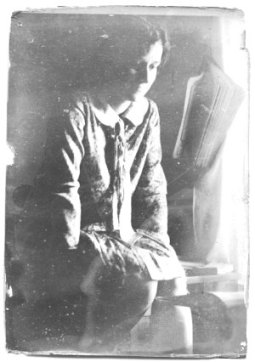
Young Winifred

Winifred Culliton Enright

My mother, Winifred Culliton Enright, was a painter. Her paintings hang on my walls. They have gone everywhere with me, to the South Seas and back. They have survived all the tropical cyclones I have. They are as part of my life as this tattoo, and like a tattoo I hardly see them anymore. They are her surrounding metaphor, she who is always with me but rarely in my thoughts.

Having an artist, an art teacher, for a mother took some of the mystery out of the profession. Her old studio—a room added onto a barn out back—was my play room when I became old enough to be trusted alone. In it were flat drawers and files of her art work from earlier years. I remember charcoal sketches of male art-school models, their jockstraps as well drawn as their muscle culture, always faceless or with their heads turned away.

The concept of careers wasn’t much pushed on kids of my generation. I don’t recall anyone ever asking me what I wanted to be when I grew up. But if they had, I would have blithely said a painter. I was already trying my hand. My earliest memories of drawing are of sailing ships. I could draw you the difference between a bark and a brigantine and name every sail and spar on a clipper ship. Mind you, in inner-city Buffalo I had never seen a sail boat, much less been on one. They were mythical vessels from pictures in books. Later, I read every sea-going saga in the Fairfield branch of the Buffalo Public Library. I was Midshipman Horatio Hornblower. I painted water colors of our frigate foolishly under mainsails in a heavy sea. I had never seen the sea.

Winifred had been trained at the Buffalo Fine Arts Academy, which was part of the city’s Albright Art Gallery. When I was sixteen I asked if I could take summer art classes at the now Albright-Knox Gallery. I had no idea what it cost—it never occurred to me—but she arranged it. I didn’t miss a class, even though I was playing baseball for several teams that summer. I would haul my catcher’s equipment bag with me to class with my uniform and all and then hide my art stuff in it from the guys I played with later in the day.

I don’t want to make too much of this, that my mother was an artist. By the time I knew her, she was mostly a mother. She’d had eight kids after marrying at thirty. I was the second to last. I remember once when I was a kid sneaking a look through vanity drawers and coming across her small box of jewelry, inside which was a fancy gold pin that said Art. At the time, I thought it referred to my dad, whose name was Art, and I thought that was neat, that she had a gold pin with his name on it. My oldest brother Joe became a painter for a while. I didn’t.

I never made it past semipro baseball either, though once I left home I have always needed to be near the sea. I was eighteen when I decided I would rather be a poet than a painter. Maybe I should have stuck with the brushes. For thirty years, Winifred was my most constant correspondent, and she carefully filed away every letter and postcard and poem and book of poetry I mailed her. And every time I brought a new wife to Buffalo to meet her, Win would treat them just like family. She was good at that. God bless her. She was good at a lot of things. She lived to be 94.

North Korean Soldiers

North Korean Soldiers

In the photo of the North Korean soldiers
can you zoom in on the woman marching
on the far left, the one with the fewest
medals on her chest and a mouth
like the petals of a baby flower,
the one holding her Kalashnikov
as if it were a Stradivarius?
God, she doesn’t want to be there.
Is that why she’s the prettiest?


Novel Talk

Fastnet

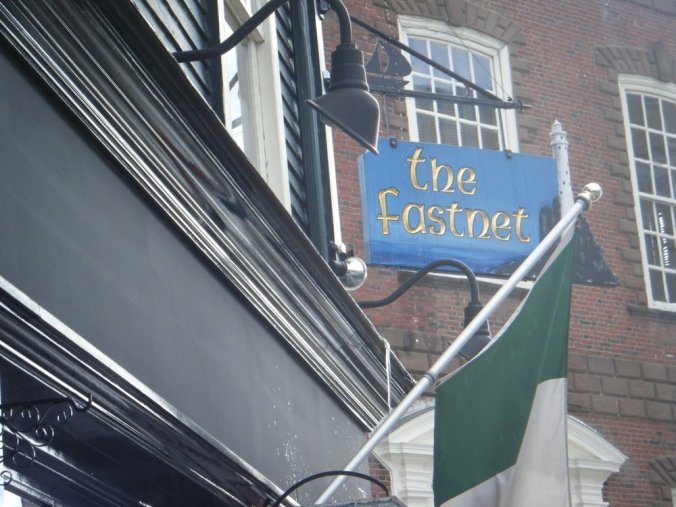
Saturday I gave a talk and reading at the Newport Public Library—a fine room, a lovely audience of sixteen. I sold two books, to old friends. (New Englanders are not into spontaneous purchases, a parsimonious crowd.) (Don’t forget that their Revolution was about not paying taxes.)  But listening to me was free. What I made on sales paid for drinks and a shared dish of fried calamari after at the Fastnet pub for Connie and me. I’m not complaining. Good squid, good Guinness, good company. A receptive audience at the reading as well. For those of you who missed the talk, here’s an excerpt, about writing novels.

I would like to read you some excerpts from the novels; but, given this opportunity, I would first like to throw in my tuppence about what makes novels work, whatever their pigeon-holed genre.

There is structure, of course. That’s a given. You’re telling a story, and in our Western tradition that means a beginning, a middle, and an end, however managed. That’s not a universal, by the way. It’s a requirement lacking in the folk tales of many cultures, and it is pretty much totally missing in the books of the Old Testament. But American readers are trained to have expectations they liked fulfilled. I think in three acts—set it up, fuck it up, resolve it.

For me, inside that structure there are three major areas of creative concern—character, place, and plot. In that order of importance. For me, novels are where I get to meet new and hopefully fascinating people—characters I want to hang out with or at least observe in true erratic human fashion, whose dialog both confirms and surprises. When I remember books, I remember characters.

Two, place. Real places, places closely observed and described. Places I can feel and see and smell. Nothing fantasy—no distant planets, please, no Narnias or Middle-earths or antiseptic Starships—but rooms I might sleep in, trails I would like to walk, real city streets that could not care less about me.

Plot is last, but you got to have one. By the way, plot is also not a universal in folk narratives, at least not plot as we think of it. I had a friend whose favorite put-down line was, “And your point is?” She watched a lot of television. Everything had to have a point, had to reach some previously hidden but predetermined dénouement. Every story was some sort of morality play.

The very popular success of the detective story has led to this. Those seemingly infinite hours of cop-show reruns on cable has pushed plot to the forefront—its twists and decoys, red mackerels and clever deductions. Plot has come to be synonymous with suspense, which is fine for a TV show that has to hold the viewer’s attention through multiple commercial breaks. (“Ask your doctor if this snake oil is right for you.”) But now that standard is being applied to novels as well, so that Grisham and King are the largest names on book covers—authors who admit the only way they can hold their readers’ attention is by scaring them or holding them hostage to the next secret. What was the name of that Dan Brown blockbuster, the one they made into a movie? I can never remember its name. The pacing of an international perils of Pauline. The language, the author’s voice has been drowned out by the suspenseful music on the soundtrack and the next staccato burst of automatic gunfire.

My Samoan mentor, the great playwright and screenwriter John Kneubuhl, who wrote episodes for many serial TV shows in the ‘50s and ‘60s, once pointed out to me that there are only four or five basic plots (which I have forgotten). “Boy meets girl; boy looses girl; boy gets girl back.” Think about it—are any of the novels in your personal pantheon there because of their plot? Reading a good novel should be more than finding out who done it. There is this garden of language and insight, character and place where a book can take you.

Plots are nice. Plots are necessary. So is popcorn at the movies, but you don’t judge the quality of your night at the flics by how fresh the popcorn was.


February

Crows 1 - Copy

Ask the crows

they have a quorum

in the barren trees.

They cast more shadows

than they number and

though they have no leader

they all follow.


All the other birds

excuse themselves

from the joyless woods.

A murder of crows

in a frozen world

knows how it feels

to be alone with death.


John Enright


Baseball

Satchel Paige

Satchel Paige

It is that blessed time of year again, when the season opens in uncertainty and hope. When new guys blaze across the outfield, slamming into fences, and superannuated sluggers acquiesce to the role of designated hitter. Five months ahead of games behind and on base percentage. A pleasure except for all those goddamn truck ads.

I played a lot of baseball. When I was a kid it defined the months when there was no snow on the ground. I was good at it, but never big enough or strong enough to be more than just good. I was a catcher mostly, and what I liked about the game was that even if you weren’t the best you could often out-think them. I made it to semi-pro in the summer of my seventeenth year, catching for Hewitt-Robbins in the Greater Buffalo Industrial League. They paid me when we won. Then I discovered other things, like girls and the private joys of wandering. When I was a kid I measured the worth of things in catcher’s mitts. Top of the line was about twenty-five bucks, four to a hundred, forty to a thousand. The day my dad sprung for a pair of pricey (one catcher’s mitt) kangaroo-skin spikes I knew he truly loved me. I had a good arm but had trouble hitting the slippery shit that the old guys threw.


Easter, Passover, Opening Day
________________

Another thing I like about baseball
is that they don’t give anyone
whistles to blow or buzzers to
set off or only so many time outs.
As my wife says, it’s real time
and therefore gets to set its own pace.
I describe to her how
your hands sting in early April
when it’s forty degrees out and you
foul off an inside fastball.

What’s so cruel about spring
is that it’s not yet summer,
dusk comes too soon, and everything
must start again in mud and hope.


The Throw to Second
_____________________

If your body can’t—if blind you can’t—
make that throw to second in your dreams
you got no business catching.
The mitt goes down and out
like the weight on a catapult and
from behind your right ear the ball is launched
with a peculiar straight-arm snap of the wrist.
It’s a throw unlike any other,
a bazooka’s accuracy or nothing.
Explosion has no grace. You end up
on your face or close to it.
The shortstop’s safe because
the throw was there in time
to cancel the slider’s need for spikes
and you’ve nailed the sucker.


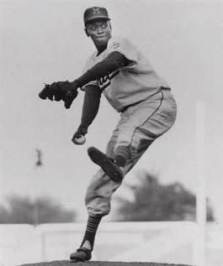
Leroy Satchel Paige
__________________

The soul of any journey
is its unendedness,
therefore all our heroes
should be those who just
refused to fucking stop.

Like someone who at 42
began his “rookie” season
in the show with Cleveland
some thousand wins behind him
in the Negro Leagues, the bush

which counted for zip in
the real books, the white books
the history of the bigs.
Like some unpublished Homer
some hero of an unknown kingdom

an ageless sage playing baseball
in a shadow world of greatness
ever moving—Mobile to
Chattanooga, Pittsburgh to
K.C., Cleveland to the Cards.

At 59 he was still throwing
shutout innings for the A’s.
Excuse me if I stare
trying to see who’s pitching there
extra innings after midnight.


The Zen of Baseball

Satchel Paige didn’t throw fastballs
or curve balls or sliders. He threw
what he called the trouble ball
along with the bat dodger and bee-ball.
He called it the bee-ball because
“it be right where I want it to be.”

He was a skinny dude and I bet
he hid the ball well and worked fast.
I would have liked to catch for him.
Somehow I would know where he wanted
the target of my mitt to be
—bat dodger down and away.

The Zen part is we wouldn’t keep score,
no stats, just the next swing and miss.

(Poems from 14 Degrees South, University of the South Pacific Press, © John Enright, 2012)

Roundtrip Journeyman

Cities I Have Walked This Way

(looking for sense in the time map)

Buffalo, Boston, Manhattan, Dublin, London,Frankfurt, San Francisco, Copenhagen, Berkeley, Charleston, Portland, Honolulu, Venice, Bozeman, Paris, Stockholm, New Orleans, Hong Kong, Chicago, Apia, Suva, Seattle, Sydney and Townsville and Auckland, at least

Take it to the wall again tonight, bro.

Finish the bottle and the cigarettes.

You’re not there yet. Take it to the streets

long after midnight. At the market

women are sleeping beside their taro.

Taxis are taking the last whores home.

Take it to the waterfront where always

everywhere men are awake with their

cigarettes. Walk it past the police station,

let the back street dogs bark at you.

Take it back to your indigenous city jungle,

walking like a ghost that casts a shadow.

Take it back, reclaim your birthright—

lost nights on the street like a swollen

scabbed-over fist, a bad cup of coffee,

a women in your brain driving you crazy and

a long walk home where you don’t want to be

because the words won’t begin and

the bottles are empty and the bed

is a succubus. Walk it off, shake it off,

city boy. Disappear in an alley way,

walk through that wall to survive.

(from 14 Degrees South, John Enright © 2012)

*   *   *   *

“I think you travel to search and you come back home to find yourself there.”
― Chimamanda Ngozi Adichie

*   *   *   *

3700 miles later, Connie and I drive back across the Jamestown Bridge from Kingstown onto our home island, making this a roundtrip. We have been dodging weather all the way up, waiting for windows of warmth to the north. Not all journeys are roundtrips. There have been many places of no return, just passing through.

There have been hitchhiker wandering times in my life when I would wonder if the strange town I was hiking into with just a pack on my back would become a terminus destination. I might meet some woman in a bar, find some seasonal work; and the next thing I’d know it would be three seasons later, she’d be pregnant, and I’d just bought her a used washing machine. That almost happened a couple of times. Life would have been different. Fate is just another name for happenstance. Chaos shrugs off determination. One of them was named Petranella, warmth in a Montana winter.

In and out of time, like traveling from state to state. There is nothing as timeless as an empty highway, where your mind is free. The future is ahead, speeding toward you, but you can’t see it. Or think of it this way—that you and the present are stationary, unmoving, and the world and time are speeding past you.

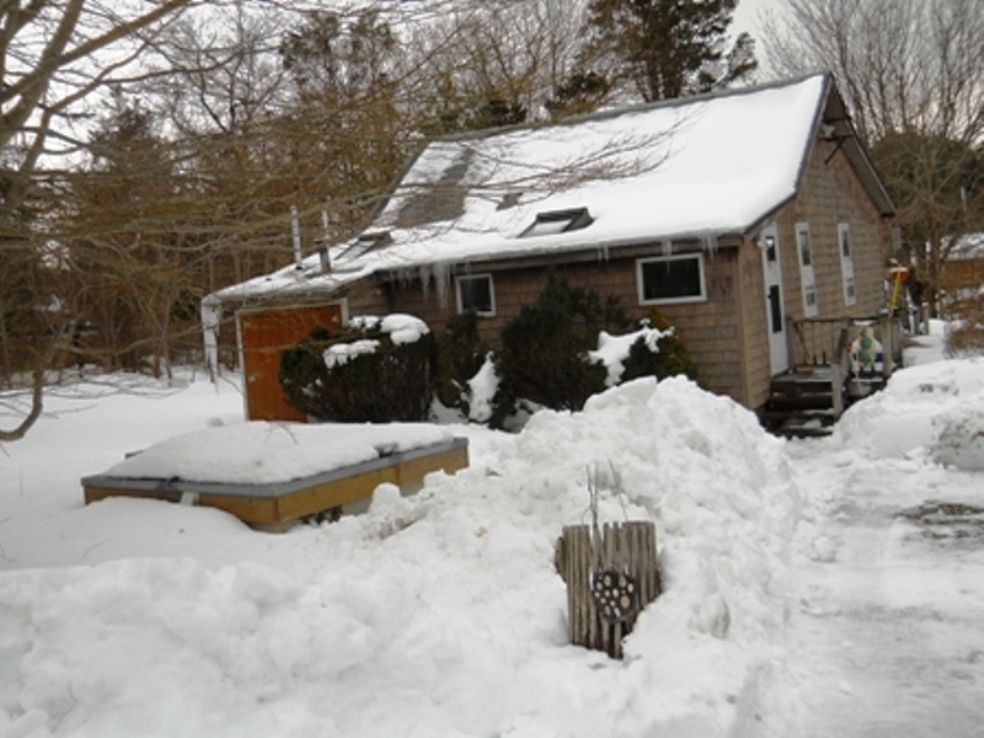
home Back to our cabin buried in snow where the road ends at the woods, a single deer track through the drifts. The Weather Channel has made it from Juno to Thor in the naming of storms in our absence. I turn my cell phone back on. The six weeks of collected mail is mostly bills. The first night back my dreams are all of Samoa and filled with the dead. Is déjà vu caused by past dreams of the future? In Florida the most common birds were the always effortlessly circling vultures.

Roundtrip. Desert nomads followed a cycle, always moving, always returning. No true navigator ever set sail thinking that he could never return. We come home and find ourselves, like an imprint in a favorite chair.

Juno In January

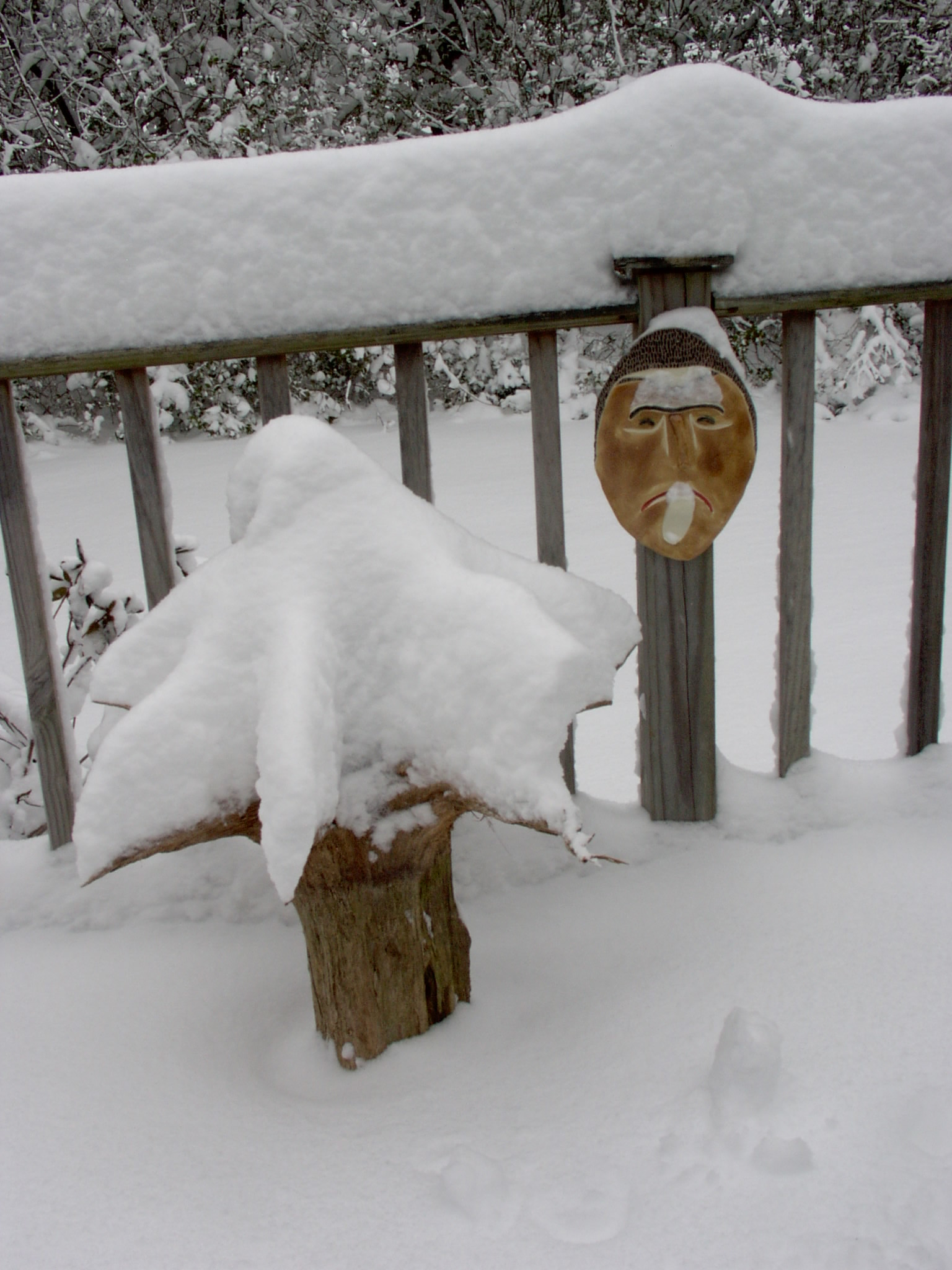
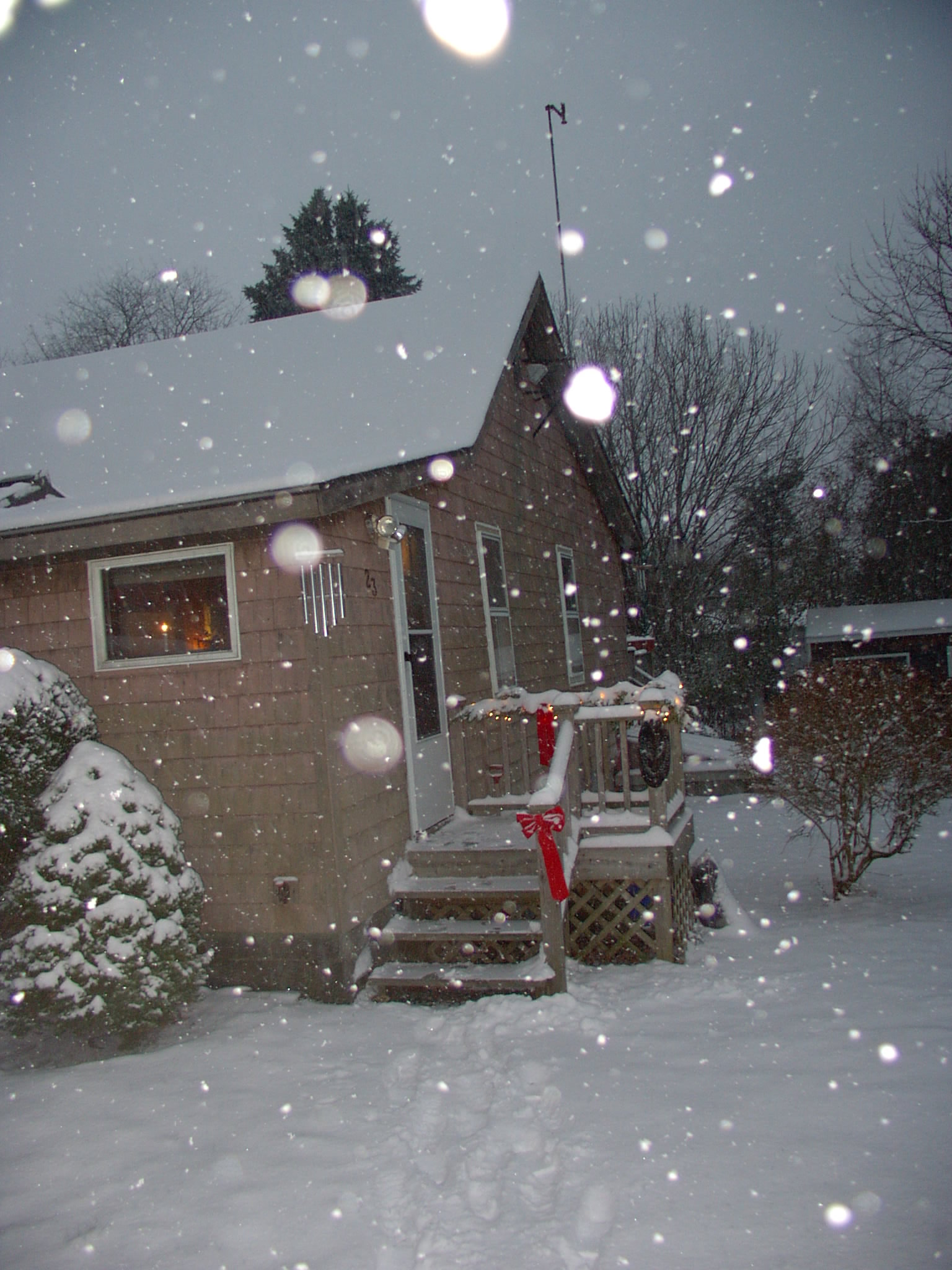
Snow maskConnie and I waited out winter storm Juno before departing Rhode Island. Juno, the premiere Roman goddess, ancient defender of women’s rights. American Christians put up with this? An 80-hour chunk of the news cycle dedicated to a pagan goddess with feminist tendencies? Ask Jupiter about it, as always unattributed. I paid $50 to have our Toyota shoveled free. Juno was trying to keep us home, together by the wood stove. Hearth and home—the nucleus of female power, the core of distaff gravity. The road, the edges, those were male worlds. It was always the men who wandered away, the males that expanded the gene pool by arriving somewhere else.

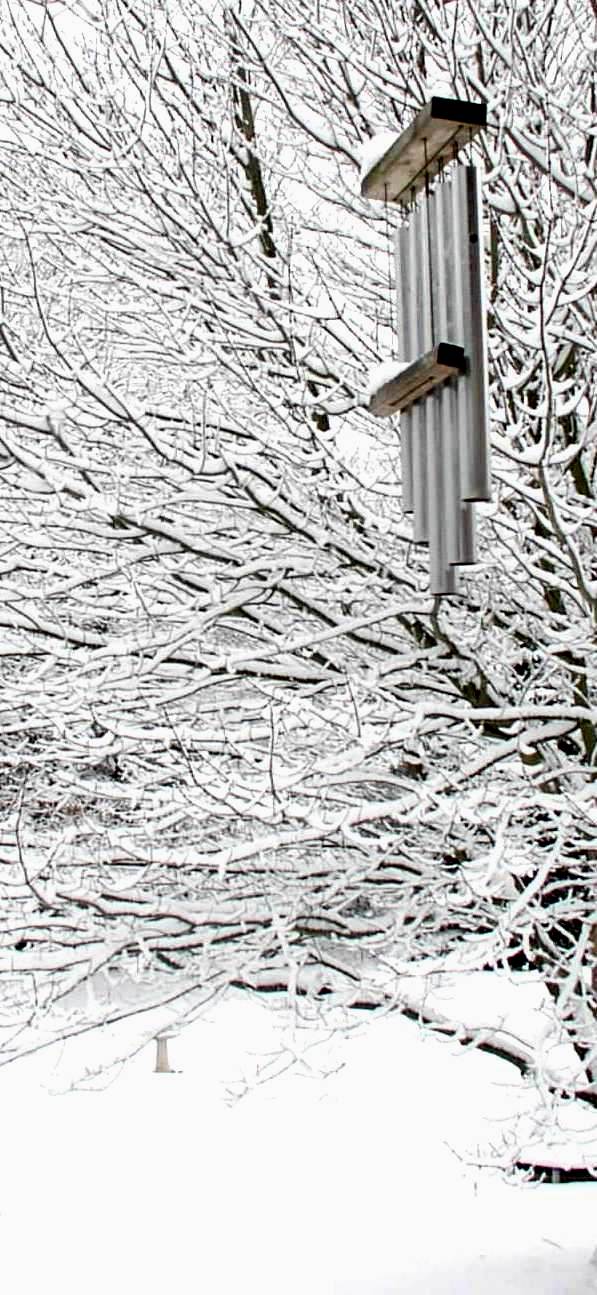
Snow chimes

Only, it was Connie who wanted to hit the road. “Snow? So what? Let’s go.” Come to think of it, when you see photographs of refugees, they are most often women, women and children.  Connie was a willing refugee from winter; she was taking me with her. The derogatory term is snow birds—those geriatrics free enough to flee the northern freeze, to escape the torture of winterboarding. Derogatory based on envy. I like being referred to as a bird, even metaphorically.

Bright snow flakes

For 26 years I had lived in the southern hemisphere tropics, where winter meant basically a little less rain and different plants blooming. I had a six-foot high poinsettia plant in my back yard that I had to cut back every 4th of July because it went crazy. I never wore shoes. The only snowballs we had was when I defrosted the freezer, and they did not last long. We tossed them off the balcony to die.

Atauloma

It would be nice to be warm again, to shed these layers of clothing. Connie is right. We are out of here. It is primordial. The womb was warm, and death is cold. Head south.

Beginnings

New Year’s Eve. The problem with New Year’s resolutions is just one letter. They should be New Year’s revolutions. Action in place of intentions. We can’t wait around much longer for someone else to stand in front of the metaphoric tank.

Big words. No tanks tonight here in the Rhode Island woods, and it’s freezing out there. But 2015 has an ominous ring to me. My 70th year, so I won’t be taking it to the streets again, and as an impoverished pensioner I have no political power. I am just a writer, who has always felt that evil fed on failed communication. The source of evil is a Jesuitical obsession.